


Your cart is currently empty.
A media console has to do more than sit beneath a television. It needs to balance the visual weight of the screen, provide useful storage, fit the proportions of the room, and keep everyday technology from making the living area feel cluttered.
Choosing the wrong size can make even a well-designed living room feel off balance. A console that is too narrow may look undersized beneath a large television, while one that is too bulky can overwhelm a smaller wall.
Storage configuration matters too. Closed cabinets can hide electronics, cables, controllers, and everyday clutter, while drawers and modular sections can make a larger living room easier to organize.
The best media console therefore depends on more than TV size. Room scale, viewing height, storage needs, wall placement, and material all influence the final choice.

It is tempting to choose a media console based on appearance first, but the television should usually be the starting point.
A TV creates a large, dark rectangular shape on the wall. The furniture beneath it needs enough visual width to support that shape and prevent the upper half of the wall from feeling top-heavy.
This becomes increasingly important as television sizes grow. A console that looks substantial by itself can suddenly appear very small once an 75-inch or 85-inch screen is positioned above it.
In most living rooms, a media console looks more balanced when it extends beyond the visible width of the television.
This creates a stronger base beneath the screen and gives the entire TV wall a more intentional appearance.
When the cabinet is noticeably narrower than the television, the screen can appear visually heavy. The effect becomes even more obvious when the TV is wall-mounted because there is no furniture structure directly supporting it.
Wider cabinets also create more room for décor, speakers, storage, and other media equipment without crowding the top surface.
An 86-inch media console offers enough visual presence for larger televisions and wider living room walls. A substantial cabinet can help anchor the screen while also providing useful surface and storage space.
Explore Dolmen Media Console →Large televisions can easily become the most dominant object in a living room. Without enough furniture beneath them, the screen may appear to float awkwardly on the wall.
A wider media console creates a stronger visual base and can make the TV feel more integrated into the room.
This is especially useful when the wall itself is wide. Filling only a small section beneath the screen can leave the composition looking unfinished, even when the console is technically large enough to hold the television.

An 80-inch console is well suited to larger living room arrangements where the TV wall needs enough horizontal furniture presence to feel balanced.
Explore Cory Media Console →Media console height affects both the furniture proportions and the way the television is viewed.
The TV should not feel excessively high when viewed from the sofa. A very tall cabinet can push the screen upward, particularly if the television is placed directly on top rather than mounted to the wall.
Lower consoles generally create a more contemporary look and work well with large screens because they preserve more open wall space above the cabinet.
However, extremely low furniture may not provide enough storage or may look visually weak in a very large room. The ideal height depends on the seating position, screen placement, and scale of the surrounding furniture.
A television wall may look balanced while standing, but the most important viewing position is where people actually sit.
Yes, in many rooms a media console still plays an important role even when the television is mounted directly to the wall.
The cabinet provides a visual anchor below the screen, helps organize electronics and accessories, and prevents the television from appearing isolated on a large blank wall.
Wall mounting can also make it easier to choose a lower console because the cabinet no longer needs to physically support the screen.
This can create a lighter, more architectural look while preserving valuable storage below.
Modern living rooms may look minimal, but they still need somewhere to store remotes, controllers, cables, routers, game systems, books, and everyday objects.
This is why the internal configuration of a media console is just as important as its exterior.

Modular media furniture can be especially useful for extra-wide TV walls. Instead of forcing one cabinet to fill the entire composition, multiple coordinated units can create broader storage and stronger architectural presence.
Explore Holt Modular Media Console →Even the best-looking media console can feel cluttered if visible cables run across the wall or collect behind the furniture.
Before choosing a cabinet, consider which devices need power, which components connect directly to the TV, and where the outlets are located.
Closed storage can hide many accessories, but electronic devices may still require ventilation and easy access.
If the television is wall-mounted, planning cable routing before installation can make a major difference in the final appearance.
The television itself is visually simple: usually a large black rectangle. That makes the furniture beneath it especially important for introducing warmth, texture, and material character.
Oak and other warm woods can soften a technology-heavy wall and help the media area feel more connected to the rest of the living room.
Texture creates shadow and depth across a long cabinet front. This is particularly useful with wide consoles because it prevents the furniture from reading as one large flat block.
Rounded corners, modular compositions, sculptural bases, or distinctive door patterns can make the media console feel more like furniture and less like purely functional electronics storage.

A wide oak media console introduces natural grain and warmth beneath a television, helping balance the harder visual character of screens and electronics.
Explore Holt Oak Media Console →Because media consoles are often long and positioned at eye level while seated, surface details become highly visible.
Wood grain, door construction, texture, edge treatment, and storage transitions all influence whether the cabinet feels substantial and refined.
Small details become even more important on extra-wide furniture because the front surface occupies so much of the TV wall.

Storage needs to be easy to use, especially when the cabinet holds items accessed every day.
Drawer alignment, door spacing, interior organization, and hardware details all contribute to how functional the media console feels once it is in the room.

Television walls can easily feel cold because so many of their elements are electronic, black, glossy, or highly geometric.
Visible wood grain introduces natural variation and helps soften that contrast.

On a very long console, even small differences in texture can prevent the cabinet from feeling visually flat.
Natural grain and carefully designed front panels can make the furniture interesting without adding unnecessary color or ornament.

A media console should be proportionate not only to the television but also to the room around it.
In many rooms, yes. A console that extends beyond the visible TV width usually creates a more balanced visual base beneath the screen.
Larger televisions generally benefit from wider consoles with enough horizontal presence to visually support the screen. Room size and wall width should also influence the final choice.
Not necessarily, but a console can provide useful storage, hide technology, and visually anchor the television on a large wall.
Lower consoles often work well with large televisions and contemporary interiors, but the best height depends on viewing position, storage needs, and room scale.
Common items include streaming devices, game systems, controllers, remotes, routers, cables, books, speakers, and other living room accessories.
Use furniture with the correct scale, keep cables hidden, avoid overcrowding the surface, and choose materials with natural texture such as wood or other refined finishes.
Start with TV size, then consider wall width, viewing height, storage, cable management, and the overall scale of the living space.
A well-proportioned media console can give a large screen a stronger visual base while adding the warmth, texture, and practical storage that technology alone cannot provide.
Explore Houlte Furniture →
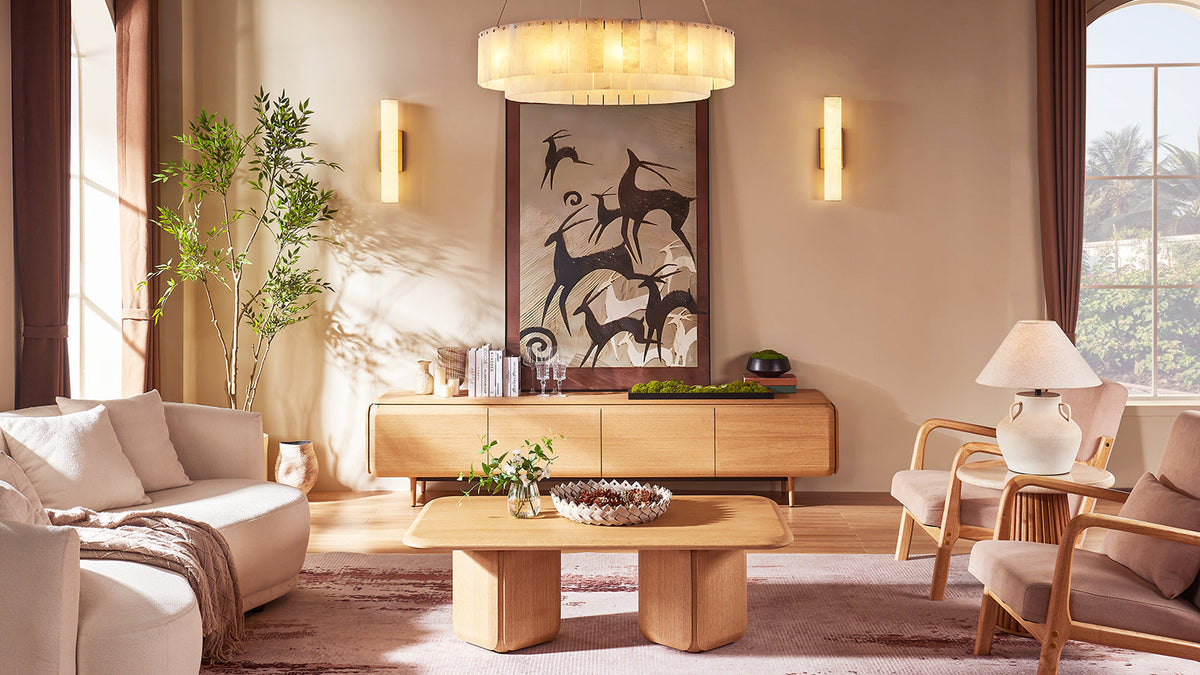
How to Choose a Media Console That Fits Your TV and Living Room
Learn how to choose the right media console for your TV and living room, including width, height, storage, wall-mounted TV placement, cable management, and style.
Read moreabout How to Choose a Media Console That Fits Your TV and Living Room
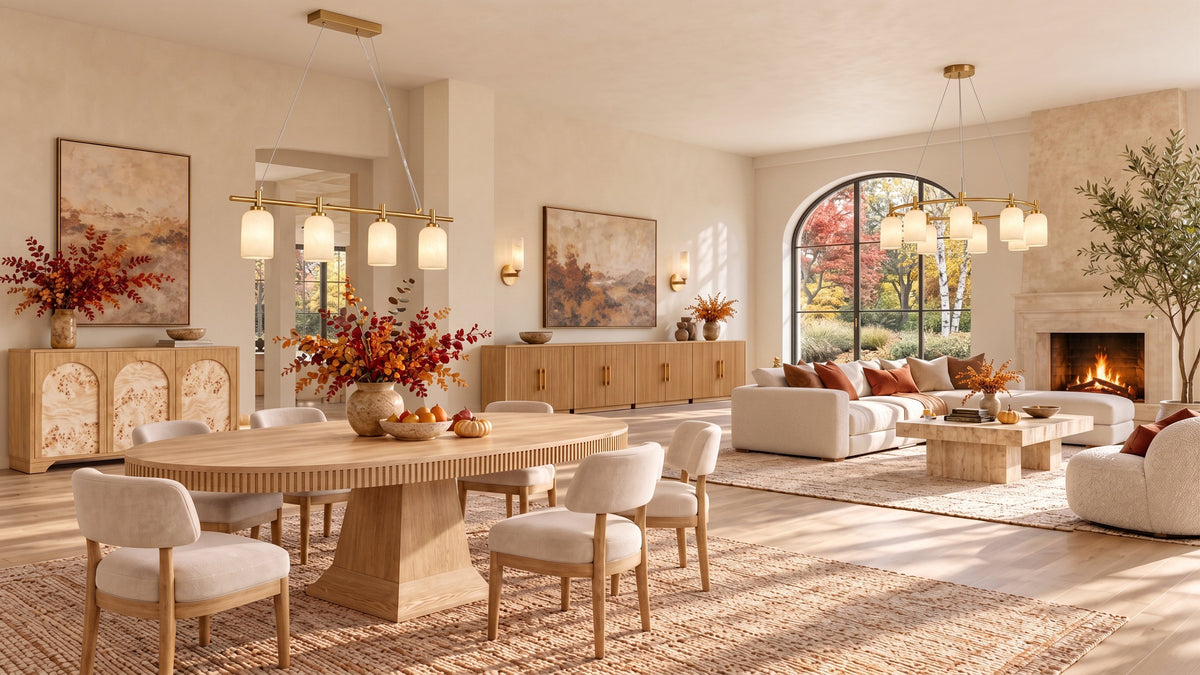
How to Layer Lighting in an Open-Concept Living and Dining Room
Learn how to layer ambient, task, and accent lighting in an open-concept living and dining room, with tips for chandeliers, wall sconces, pendants, floor lamps, and warm lighting balance.
Read moreabout How to Layer Lighting in an Open-Concept Living and Dining Room
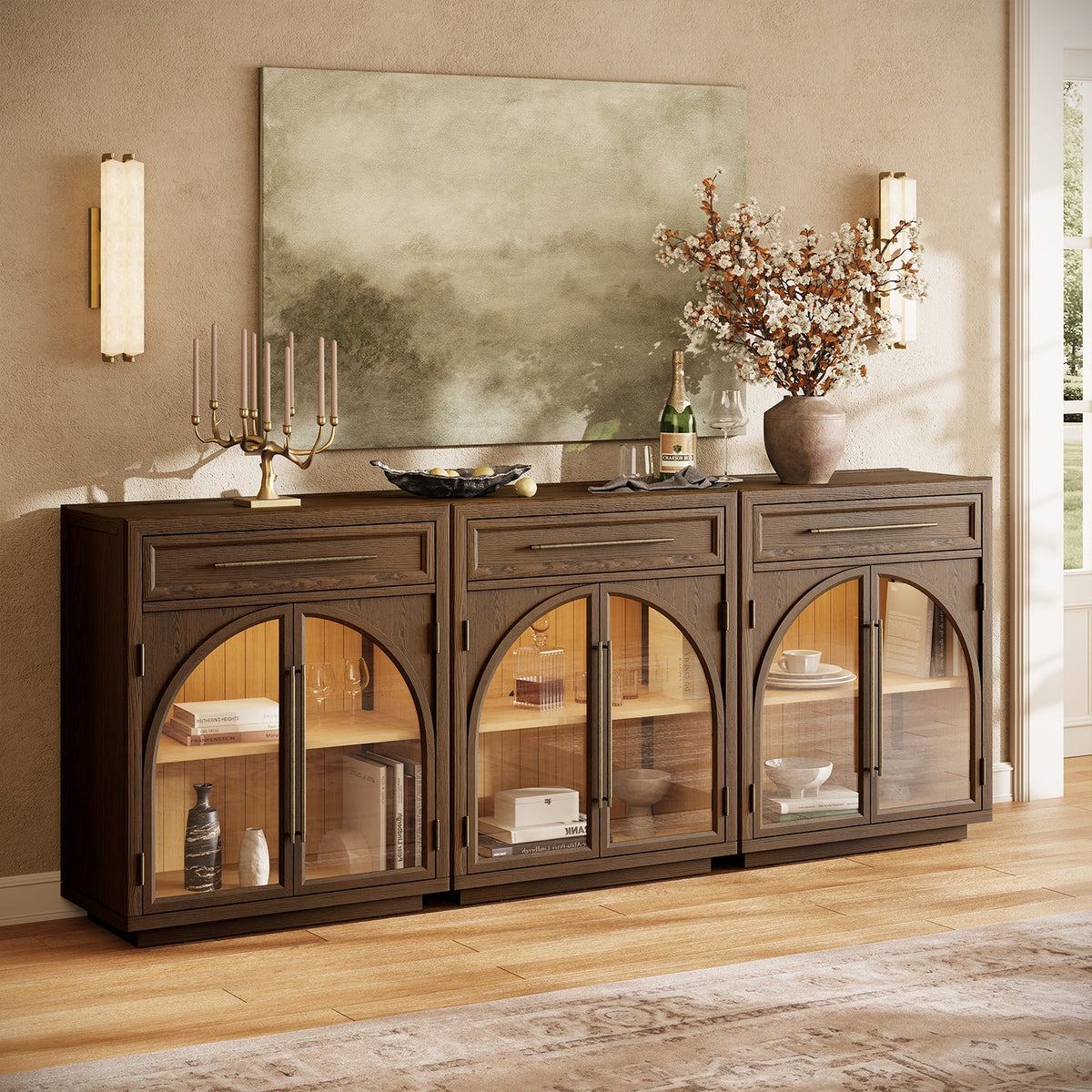
How to Choose a Sideboard for Your Dining Room: Size, Storage, and Style
Learn how to choose the right dining room sideboard, including size, height, storage, placement, and styling tips for creating a functional and balanced dining space.
Read moreabout How to Choose a Sideboard for Your Dining Room: Size, Storage, and Style
Share:
How to Layer Lighting in an Open-Concept Living and Dining Room