


Your cart is currently empty.
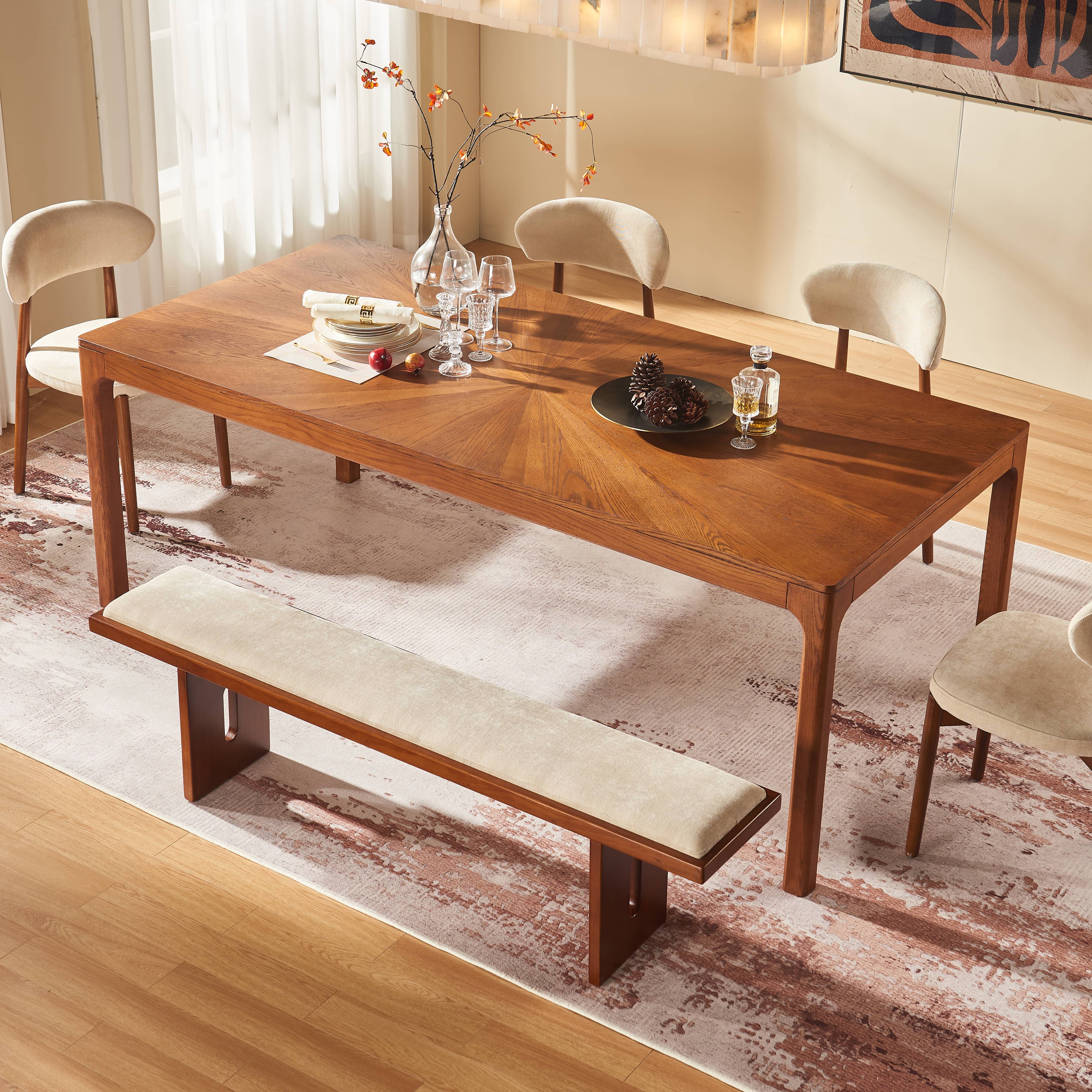
But when it comes to choosing the right rug, size matters more than almost anything else. A rug that is too small can make the dining table feel disconnected from the rest of the room. Worse, it can catch chair legs every time someone pulls out a seat.
A rug that is too large can overwhelm the room or make the layout feel heavy. The best dining room rug should frame the table beautifully while still giving every chair enough space to move comfortably.
Here is how to choose the right size for your dining room, whether you have a compact breakfast nook, a formal dining area, or an open-concept modern home.
Your dining room rug should extend at least 24 inches beyond each side of the table.
This gives chairs enough room to stay on the rug when pulled out. If your dining chairs are large, upholstered, or have arms, 30 inches of clearance can feel even more comfortable.
Before choosing a dining room rug, remember this simple rule: your rug should extend at least 24 inches beyond each side of the dining table.
This extra space allows dining chairs to stay on the rug when someone pulls them out to sit down. If the rug only covers the area directly under the table, the chairs may slide off the edge every time the room is used.
For a more spacious dining room, 30 inches of extra rug space on each side can feel even better, especially if your chairs are larger, upholstered, or have arms.
Use this chart as a starting point. The right choice depends on your table length, chair size, room shape, and how much space you have around the dining area.
| Dining Table Type | Recommended Rug Size | Best For |
|---|---|---|
| Small 4-seat table | 5' x 8' | Breakfast nooks and compact dining areas |
| Standard 4-6 seat table | 8' x 10' | Most everyday dining rooms |
| 6-8 seat dining table | 9' x 12' | Larger tables and formal dining spaces |
| Large dining table | 9' x 12' or larger | Open-concept or spacious dining rooms |
If you are between two rug sizes, it is usually better to size up. A slightly larger rug often looks more intentional and functions better than one that is just a little too small.
The easiest way to check whether a rug is large enough is to do the chair clearance test.
Pull each dining chair out as if someone were sitting down.
Measure the area covered by the table and the pulled-out chairs.
If the back chair legs fall outside the rug, the rug is too small.
This matters because dining rooms are active spaces. Chairs move in and out every day. A rug may look fine when all the chairs are tucked in, but the real test is how it works during a meal.
For the most comfortable layout, all four chair legs should remain on the rug, even when someone is seated.
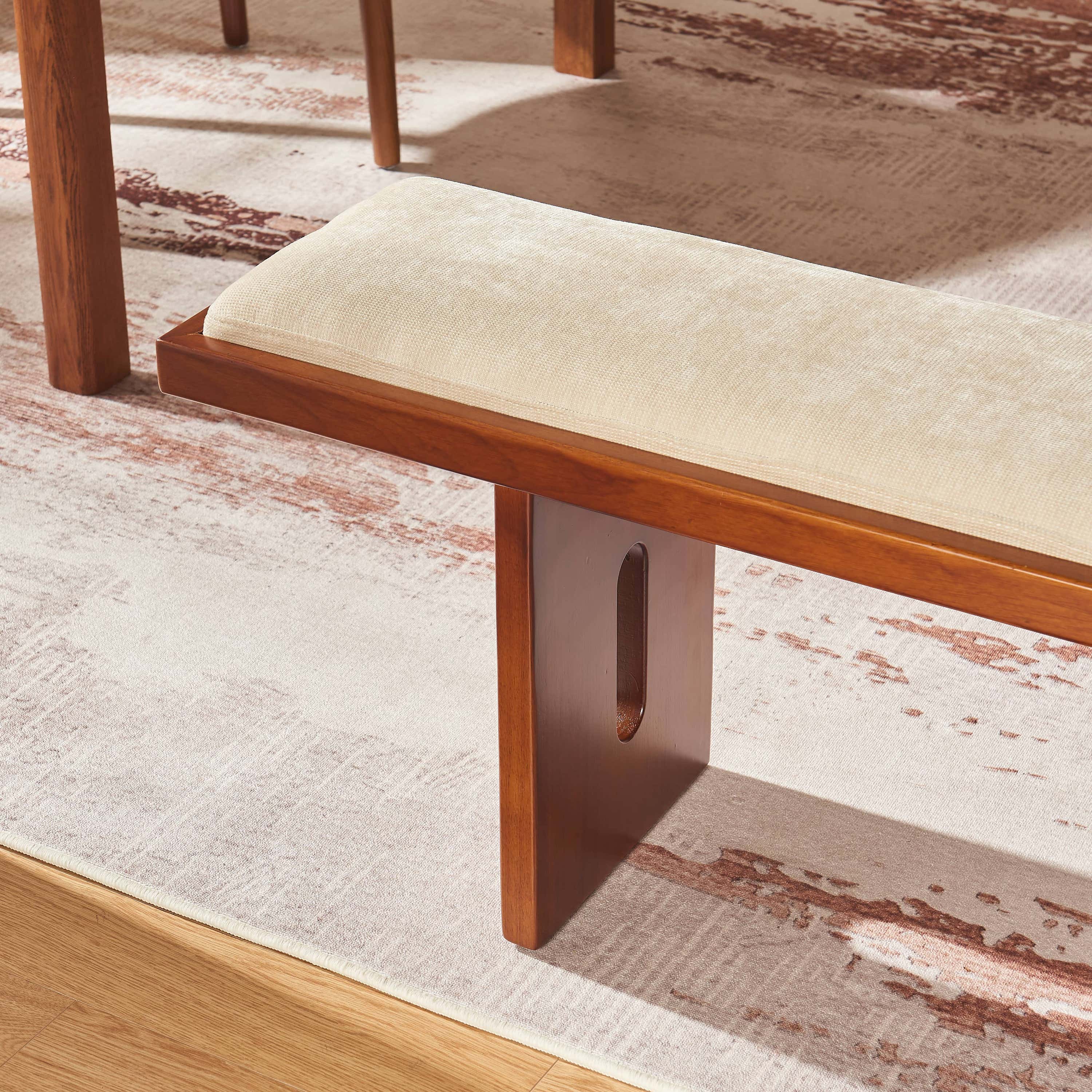
In most dining rooms, a rectangular rug is the most practical choice. Rectangular rugs naturally follow the shape of most dining tables and rooms, creating a clean frame around the dining set.
Round rugs can work beautifully under round dining tables, but rectangular rugs are usually easier to size and more versatile for modern homes.
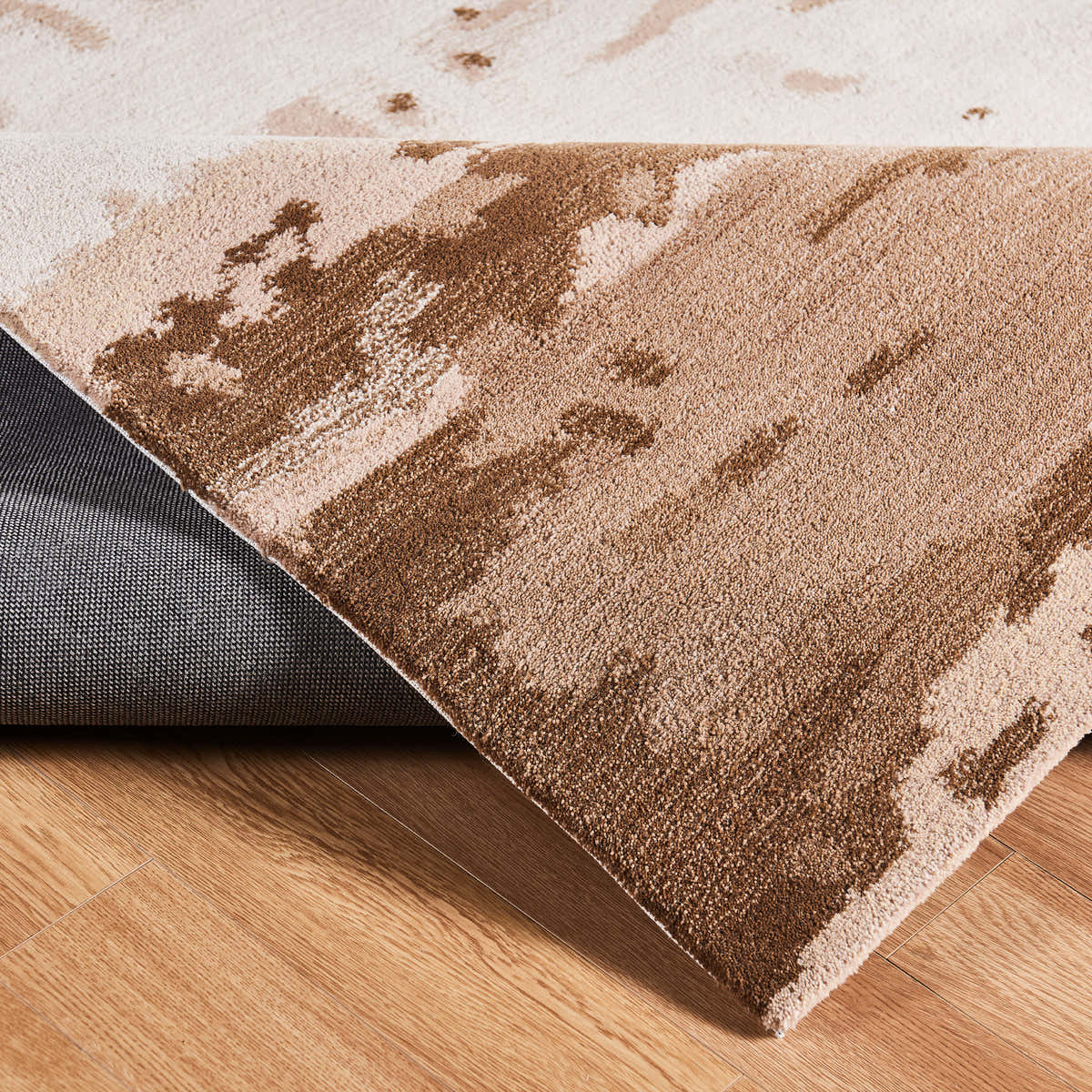
Dining rooms need rugs that are beautiful but practical. A thick, high-pile rug may look cozy, but it can make dining chairs harder to move and may trap crumbs more easily.
For dining rooms, low-pile rugs are usually a better choice. They allow chairs to slide more smoothly and are easier to maintain in a space where meals are served regularly.
If chairs fall off the rug when pulled out, the rug is not large enough.
Color matters, but size and function matter first in a dining room.
High-pile rugs can make chairs harder to slide and may be more difficult to clean around a dining table.
In an open-concept home, the rug should define the dining area while still leaving room for natural traffic flow.
The right dining room rug should balance size, comfort, and style. Start with your dining table, add at least 24 inches on each side for chair movement, and choose a low-pile rug that works for real daily use.
A 5' x 8' rug can work for smaller spaces, an 8' x 10' rug is ideal for many standard dining rooms, and a 9' x 12' rug is best for larger tables and open layouts. When the rug is properly sized, the dining room feels more grounded, more comfortable, and more complete.
A dining room rug should usually extend at least 24 inches beyond the table on all sides. This gives chairs enough room to stay on the rug when pulled out.
A 5' x 8' rug may work for a small 4-seat dining table or breakfast nook, but larger dining tables usually need an 8' x 10' or 9' x 12' rug.
Yes. An 8' x 10' rug is one of the most common and practical sizes for a 4-6 seat dining table.
Ideally, yes. All chair legs should remain on the rug, even when someone pulls the chair out to sit down.
It helps the whole room feel warmer, more balanced, and more thoughtfully designed.
Explore the Solene Rug →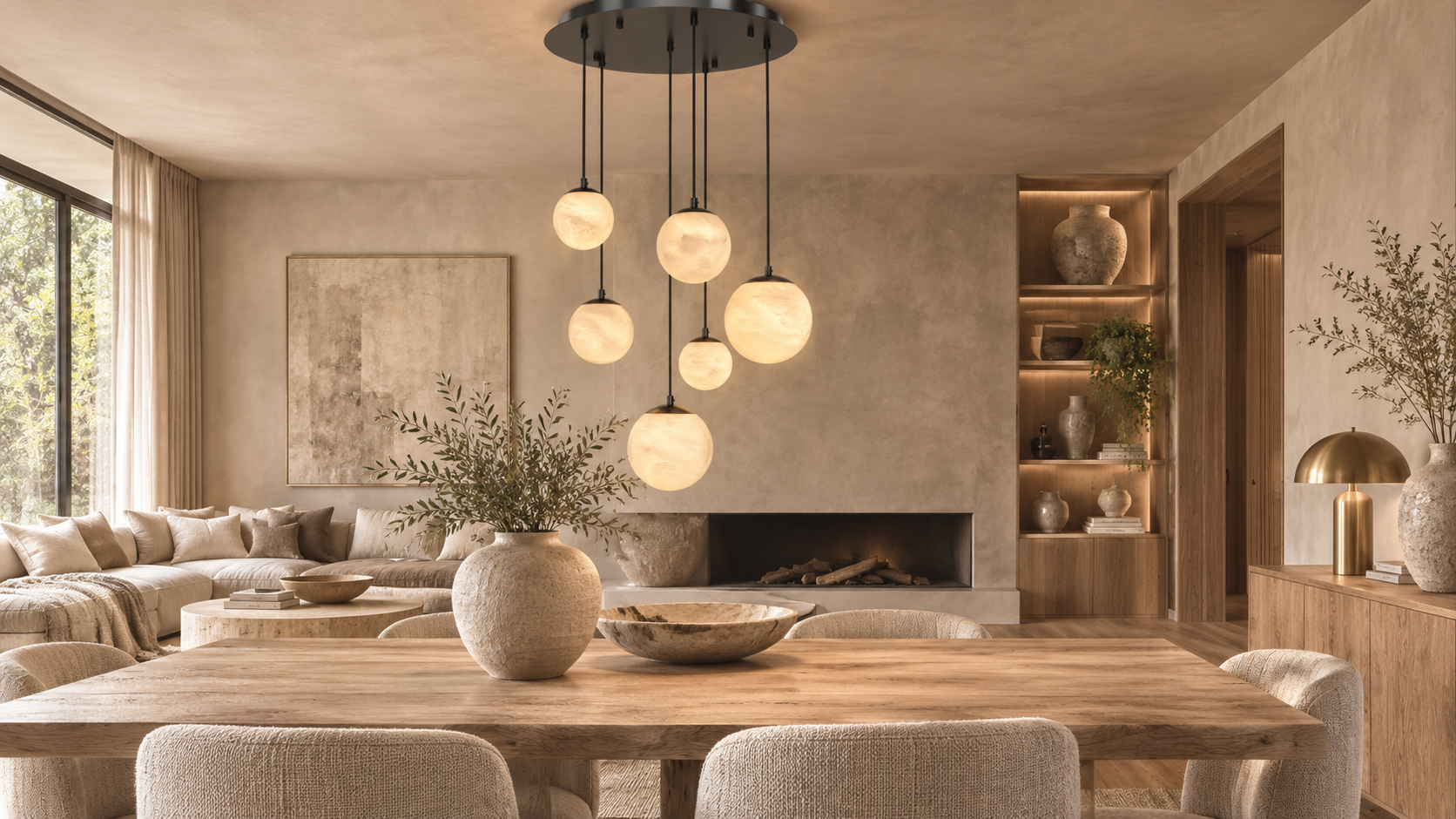
Resin vs. Alabaster Lighting: Which Material Is Right for your Home?
Read moreabout Resin vs. Alabaster Lighting: Which Material Is Right for your Home?
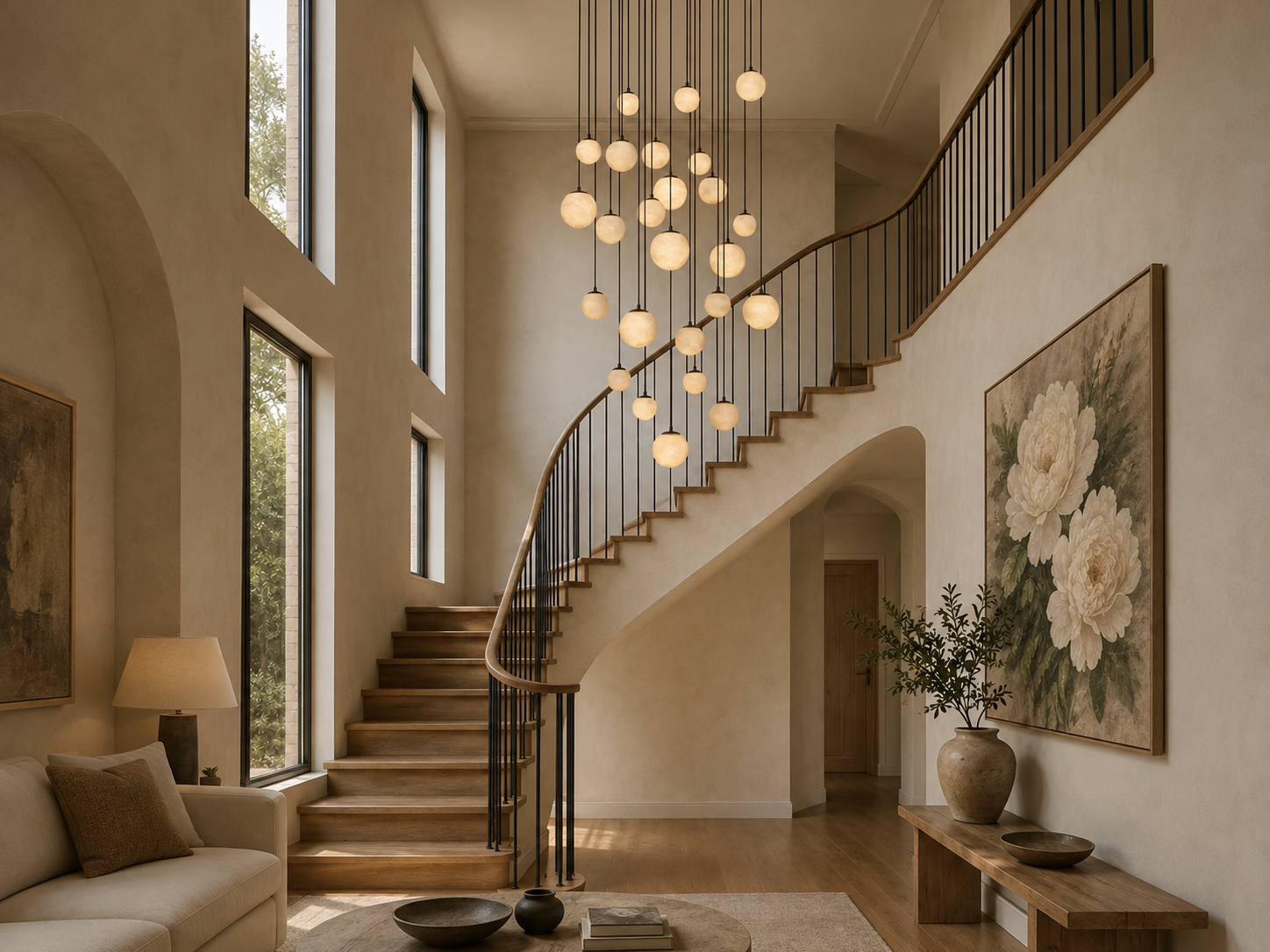
From Sconces to Statement Chandeliers: What Resin Makes Possible
Read moreabout From Sconces to Statement Chandeliers: What Resin Makes Possible
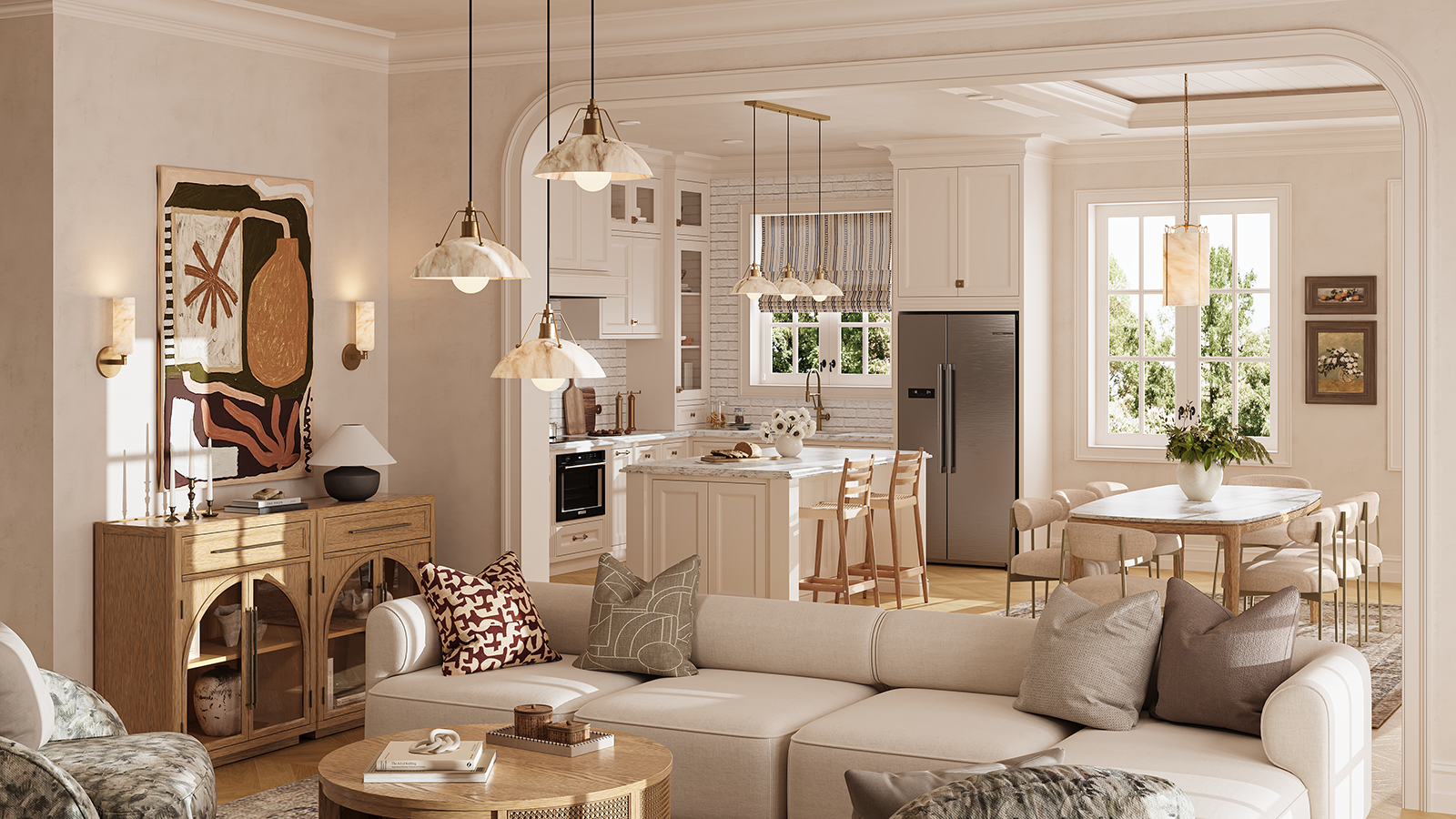
The Case for HOULTE Resin Lighting in Real Homes
Why does HOULTE resin lighting work so well in real homes? Explore its stone-inspired character, practical care, flexible forms, room-by-room applications, and the details to verify before choosing a fixture.
Read moreabout The Case for HOULTE Resin Lighting in Real Homes
Share:
What Color Nightstands Pair Best with a Dark Wood Bed?
Rectangular Rugs vs Round Rugs: How to Choose the Right Shape for Your Home