


Your cart is currently empty.
As the days become shorter in fall and winter, lighting has a much greater influence on how a home feels. A room that looks bright and balanced in summer daylight can suddenly feel flat, cool, or overly dark once evenings arrive earlier.
Creating a warmer interior does not mean filling the room with yellow light. The goal is to combine the right color temperature, several levels of illumination, and materials that diffuse light softly.
Chandeliers can establish the main glow, wall sconces can brighten vertical surfaces, table lamps can create intimate pools of light, and textured materials such as alabaster, resin, and glass can soften the transition between the fixture and the room.
With the right balance, fall and winter lighting can make a home feel warmer without making it dim, orange, or visually heavy.
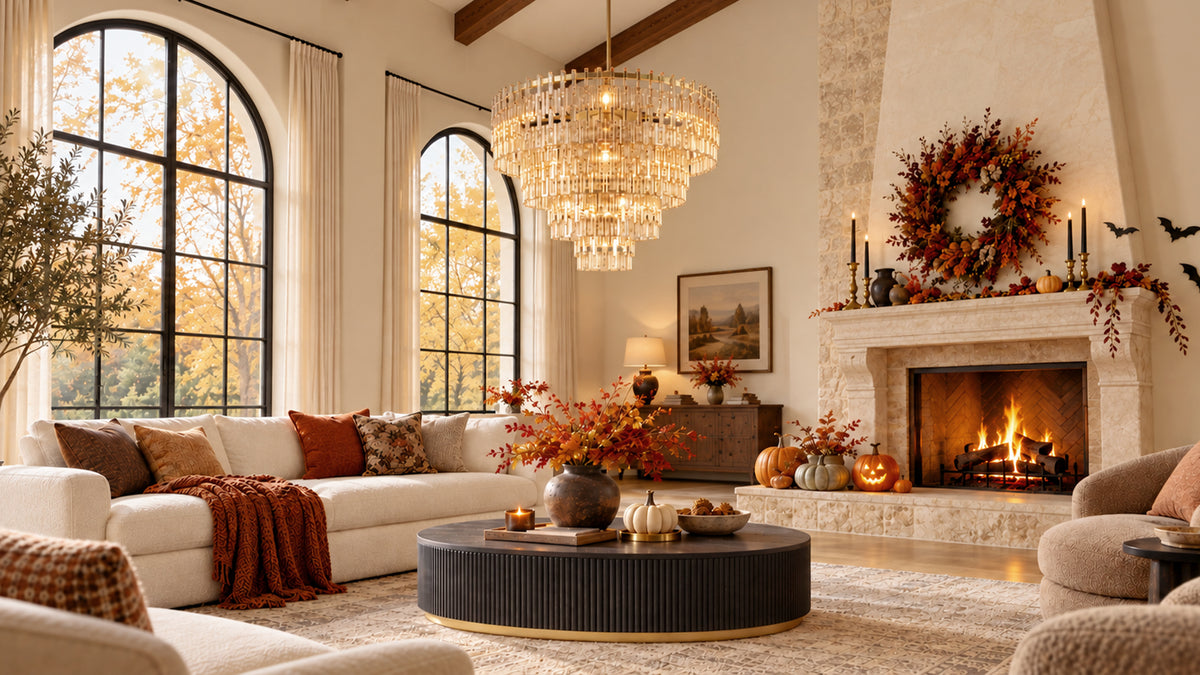
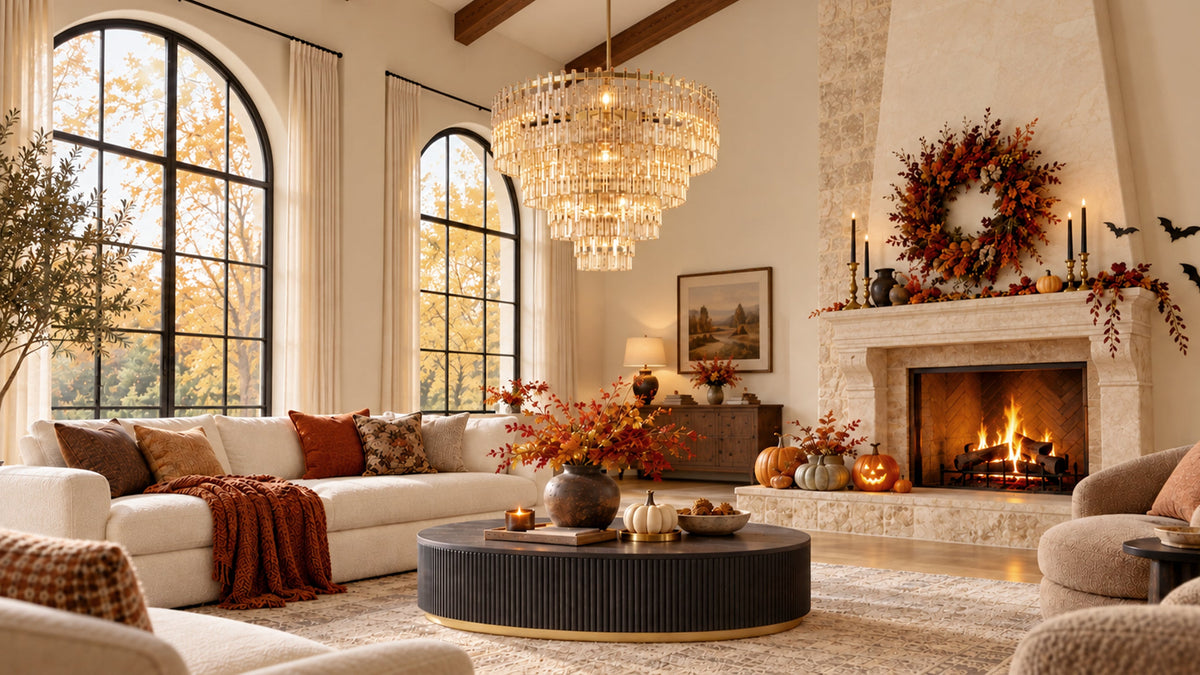
During warmer months, natural daylight often does much of the work. Large windows brighten walls, reveal material textures, and help rooms feel open even when artificial lights are barely used.
In fall and winter, that natural layer becomes weaker and disappears earlier in the day. If a room relies mainly on one overhead fixture, the contrast between bright and dark areas can become much more noticeable.
Corners may disappear, walls can look flat, and a cool ceiling light can make warm wood, upholstery, and stone surfaces feel less inviting than they do during the day.
This is why seasonal lighting is less about adding one brighter bulb and more about building several softer sources throughout the room.

Color temperature is measured in Kelvin, or K. Lower values generally appear warmer, while higher values move toward a cooler white appearance.
For living rooms, dining rooms, and bedrooms, 2700K and 3000K are two of the most commonly considered warm-white ranges.
Neither option is automatically better. A cozy bedroom may benefit from the softer impression of 2700K, while 3000K can be useful in an open living and dining area where clearer illumination is still important.
Ambient lighting provides the basic illumination for the room. In dining and living spaces, this often comes from a chandelier or another substantial ceiling fixture.
During fall and winter, the main fixture should provide enough light for the room to function without becoming the only source that is turned on.
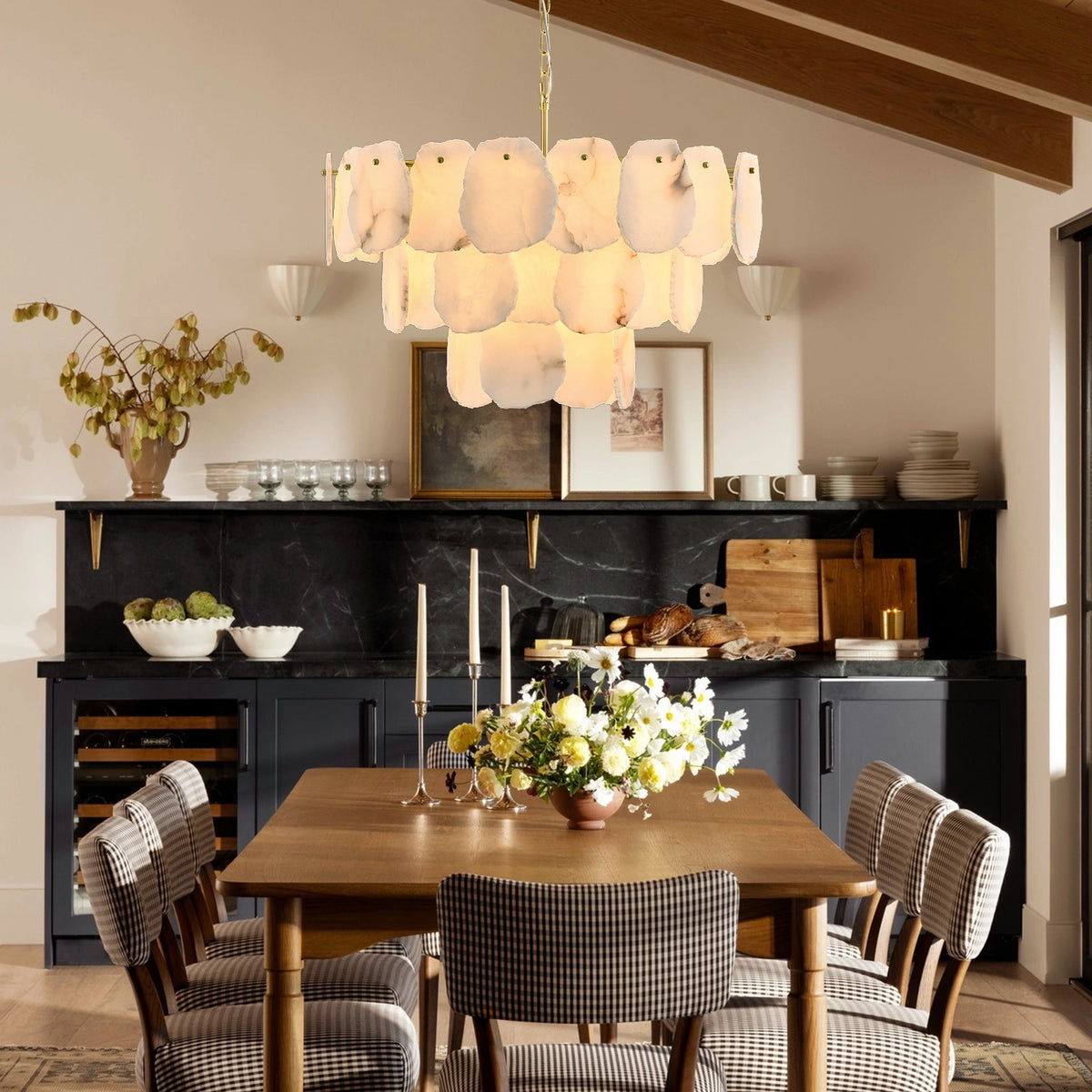
A chandelier with a diffusing material can be particularly effective because it reduces harsh glare and creates a softer transition between bright and shadowed areas.
A ceiling fixture can brighten the center of a room while leaving the perimeter comparatively dark.
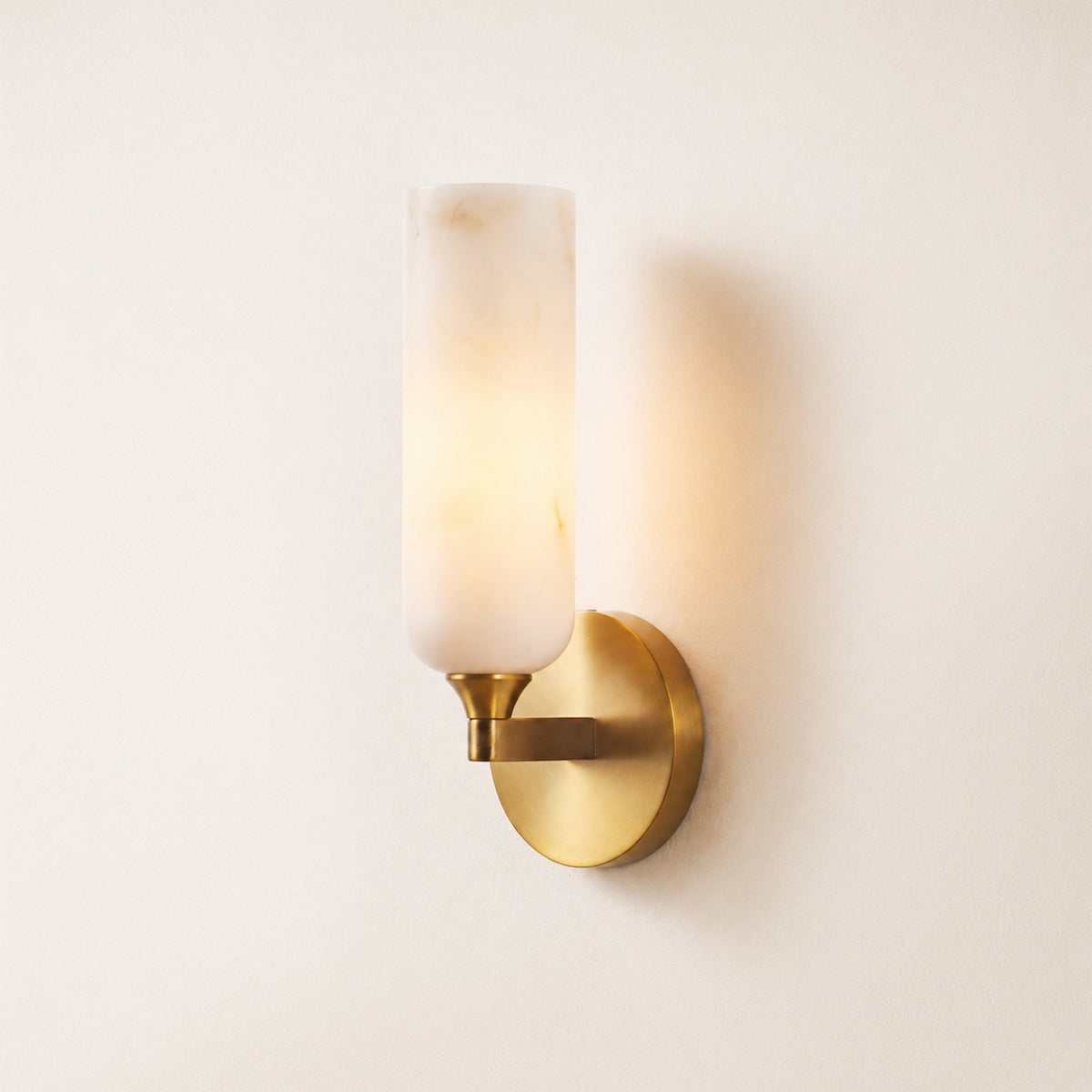
Wall sconces solve a different problem. Because they place light on vertical surfaces, they help walls remain visible and give the room greater depth after sunset.
They work particularly well beside artwork, around a fireplace, above or beside a sideboard, along a hallway, or at transitions between open living areas.
During winter, this secondary layer can make a dramatic difference because the eye no longer moves directly from a bright ceiling fixture into dark walls and corners.
One of the easiest ways to make a room feel warmer at night is to bring light down from the ceiling.
Table lamps create light at approximately seated eye level, making a living room or bedroom feel more intimate than it would under overhead lighting alone.
They are especially useful on console tables, side tables, nightstands, desks, and reading corners.
In the evening, these smaller sources can remain on even when the main chandelier is dimmed or switched off, creating a more relaxed atmosphere.
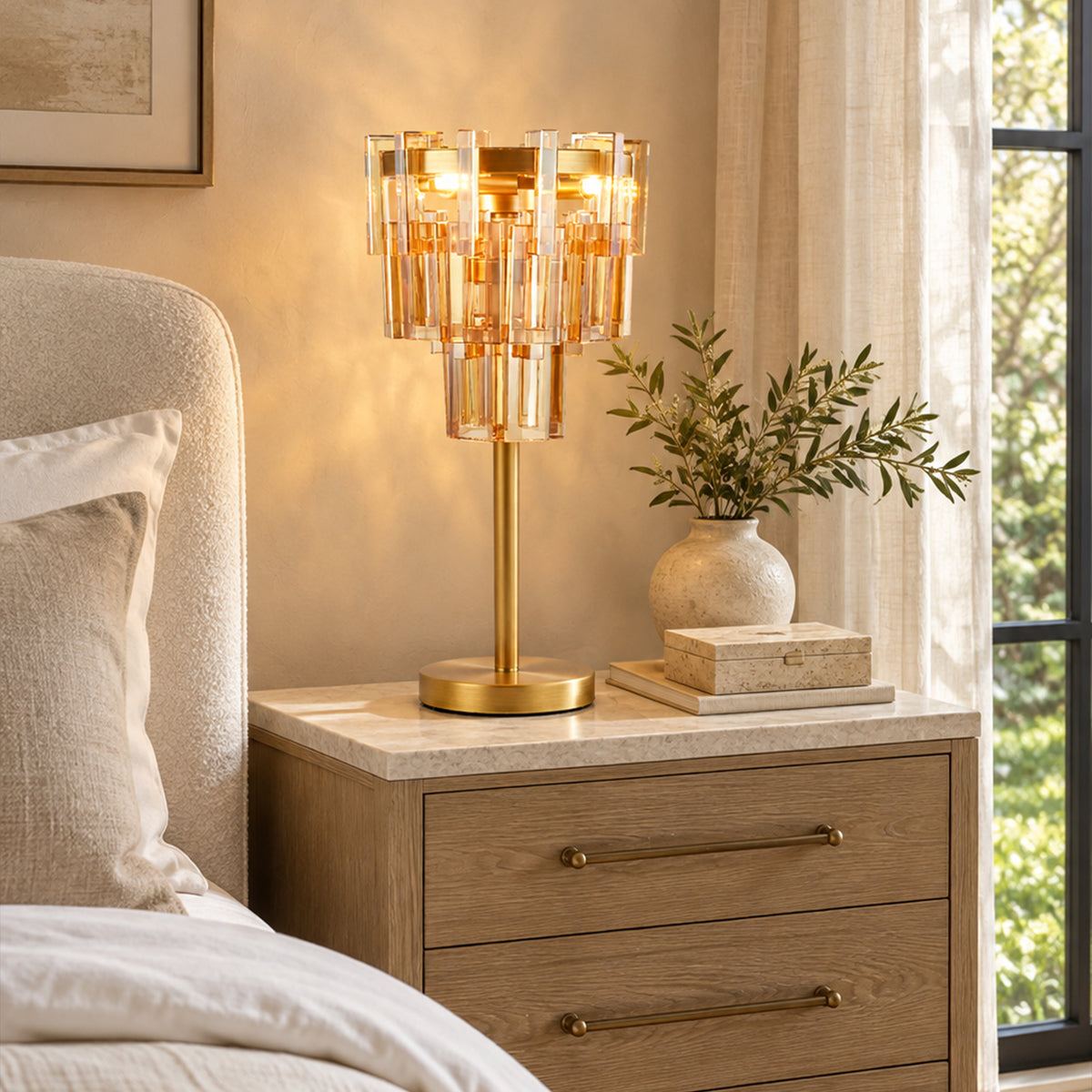
Bedrooms rarely need the same type of bright general illumination as kitchens or workspaces.
Instead, the lighting plan can prioritize softer sources near the bed and around the perimeter of the room.
Bedside pendants, sconces, and table lamps can provide enough light for reading and everyday routines while keeping the atmosphere calm.
Warm-white light also tends to complement upholstered headboards, wood furniture, bedding, and other soft materials commonly found in bedrooms.
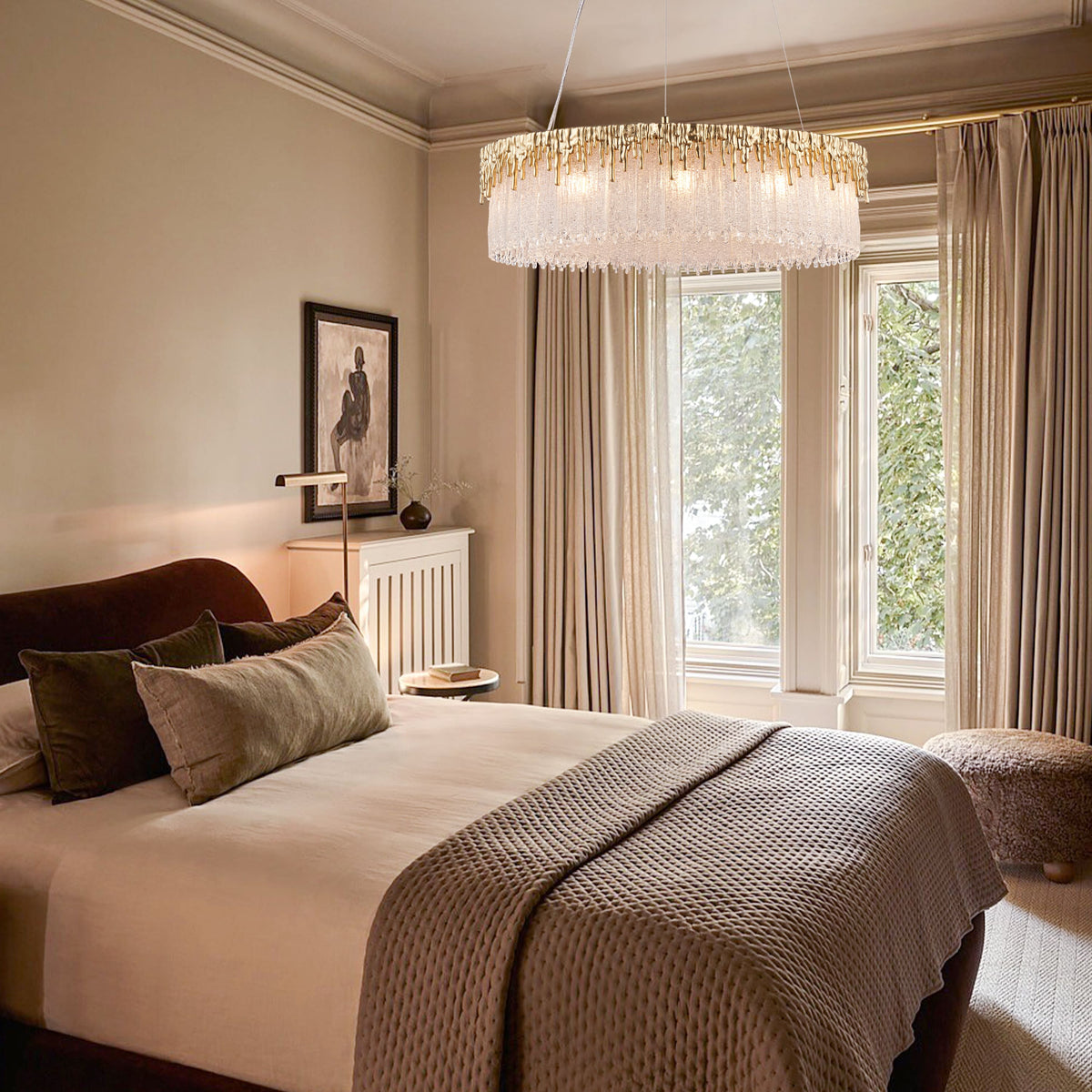
Color temperature is only one part of how warm a fixture feels. The material surrounding the light source can change its appearance just as much.
Clear glass exposes light differently from textured glass. Natural stone does not behave like metal. Translucent resin creates another type of diffusion altogether.
For fall and winter interiors, materials that soften or scatter light can help create a gentler atmosphere without requiring an extremely low color temperature.
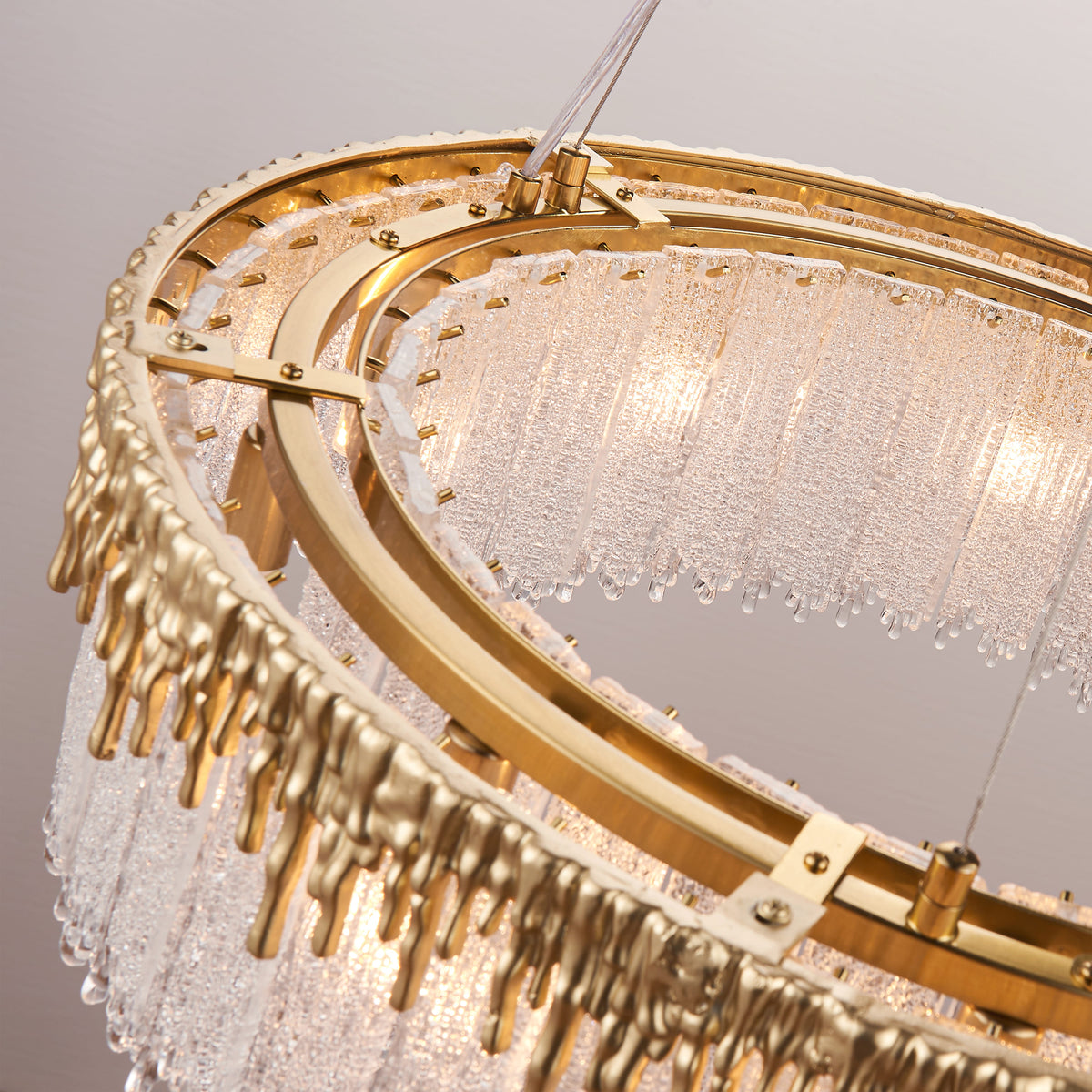
Glass does not have to be completely transparent. Ribbed, bubbled, patterned, or otherwise textured surfaces interrupt the path of light and create more visible variation.
The result can feel softer and more atmospheric than a bare source, especially when the fixture is viewed in the evening.
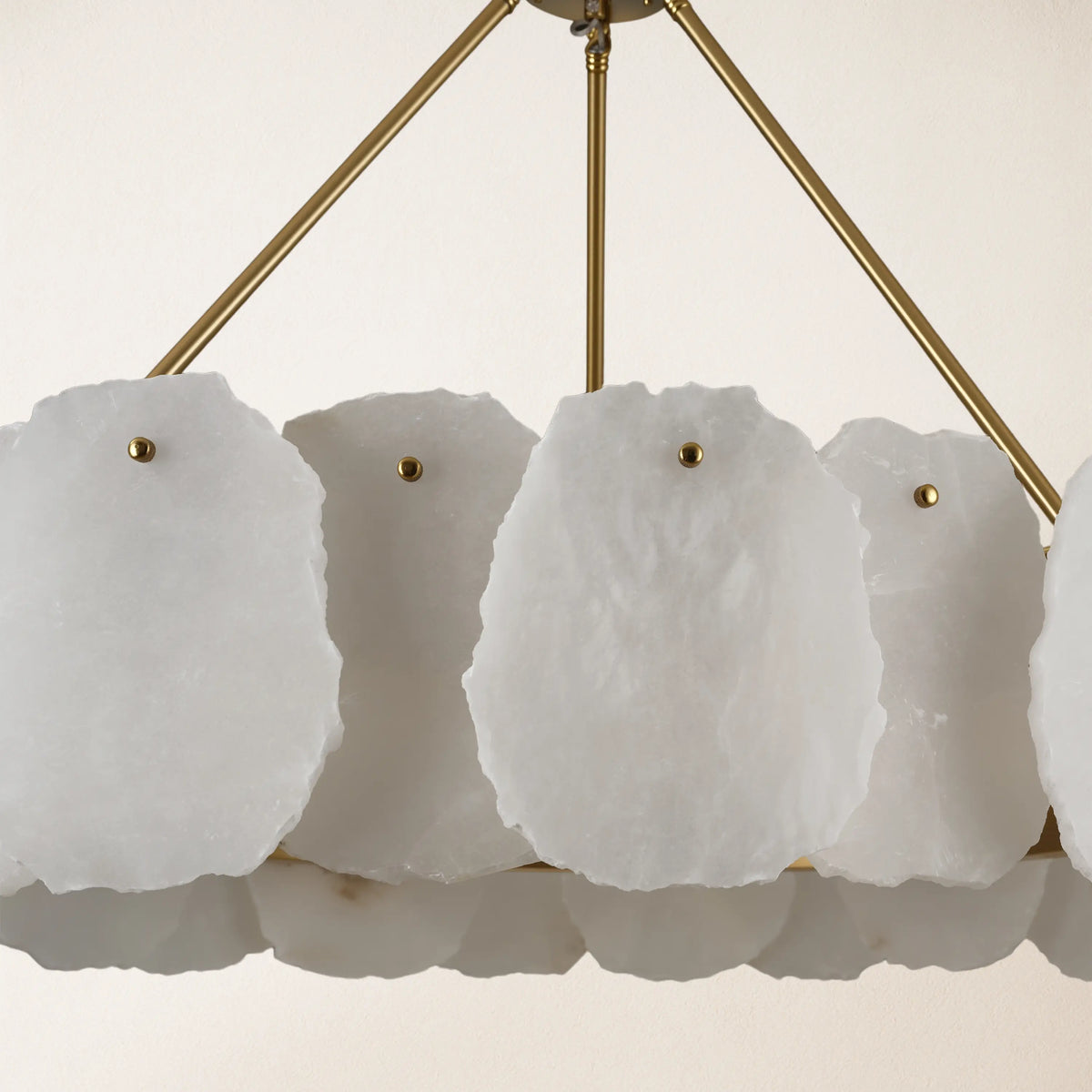
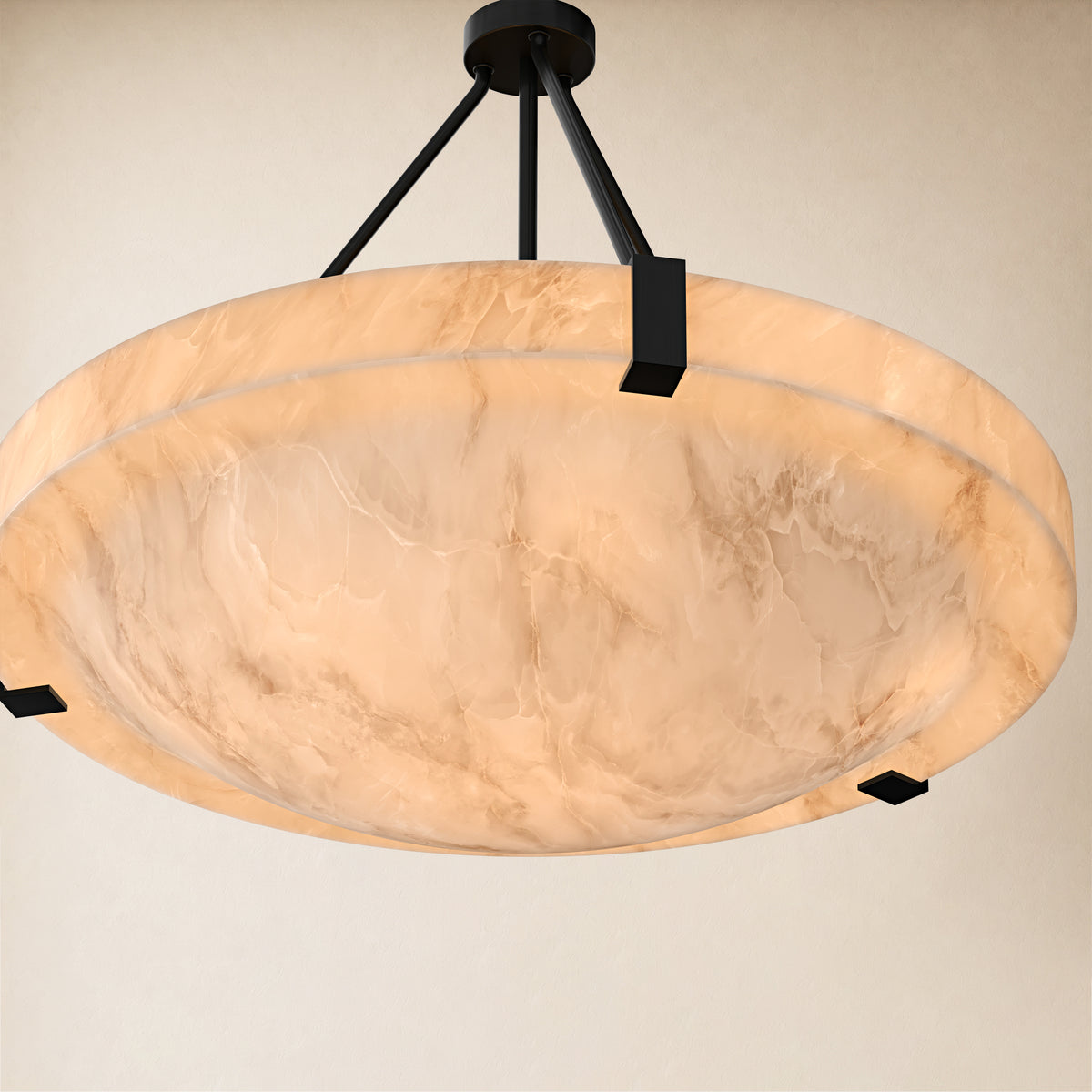
Alabaster is especially effective when the goal is to make the fixture itself appear illuminated rather than simply expose a bulb behind a shade.
Natural variation in the stone can create subtle shifts in brightness and pattern, helping a chandelier feel warmer and more organic.
This makes alabaster particularly suitable for dining rooms and living spaces where the lighting fixture remains an important decorative element even when switched off.
Resin can provide a similarly diffused effect while supporting cleaner and more contemporary fixture shapes.
Depending on the surface texture and thickness, it can soften direct light and create a warmer visual impression without making the fixture feel overly decorative.
Warm lighting is often misunderstood as simply choosing the lowest possible color temperature.
But a room can feel cozy without appearing yellow.
The more effective strategy is to combine a comfortable warm-white temperature with enough total illumination and multiple sources positioned at different heights.
Lighting needs change throughout the evening.
A dining room may need stronger illumination while food is being served, then softer light once dinner is underway. A living room may need more brightness early in the evening and much less later at night.
Dimming makes one fixture more flexible without changing its position or design.
When compatible fixtures and bulbs are used, dimmers can help move a room from functional lighting to a more relaxed atmosphere without turning the main light off completely.
The most comfortable fall and winter interiors combine warm color temperature, soft diffusion, sufficient brightness, and light sources positioned at several heights.
Both can work. 2700K generally creates a softer, warmer effect, while 3000K remains warm but can feel slightly clearer. Room materials, natural light, and other fixtures should also be considered.
Bedrooms often benefit from warm-white lighting, especially from bedside lamps, sconces, and other lower-level sources designed for relaxing.
Add light sources at several heights instead of relying entirely on the ceiling fixture. Table lamps, floor lamps, and wall sconces can reduce dark corners and create a more intimate atmosphere.
No. A room can feel warm through balanced warm-white color temperature, sufficient brightness, layered sources, and softly diffusing materials without appearing strongly yellow.
Translucent materials can diffuse the light source, reducing harsh contrast and allowing the surface of the fixture itself to appear softly illuminated.
They do not need to be perfectly identical, but keeping adjacent light sources within a similar range generally creates a more cohesive visual effect.
The most inviting fall and winter interiors combine several sources of light, consistent warm-white tones, and materials that soften illumination rather than expose it harshly.
Start with the main ambient fixture, add light to the walls and corners, then finish with table lamps or other low-level sources. The result can feel brighter, warmer, and more comfortable throughout the longer evenings of the season.
Explore Houlte Lighting →
How to Choose Warm Lighting for Fall and Winter Interiors
Learn how to create warmer fall and winter interiors with layered lighting, 2700K vs. 3000K color temperatures, chandeliers, wall sconces, table lamps, and softly diffused materials.
Read moreabout How to Choose Warm Lighting for Fall and Winter Interiors
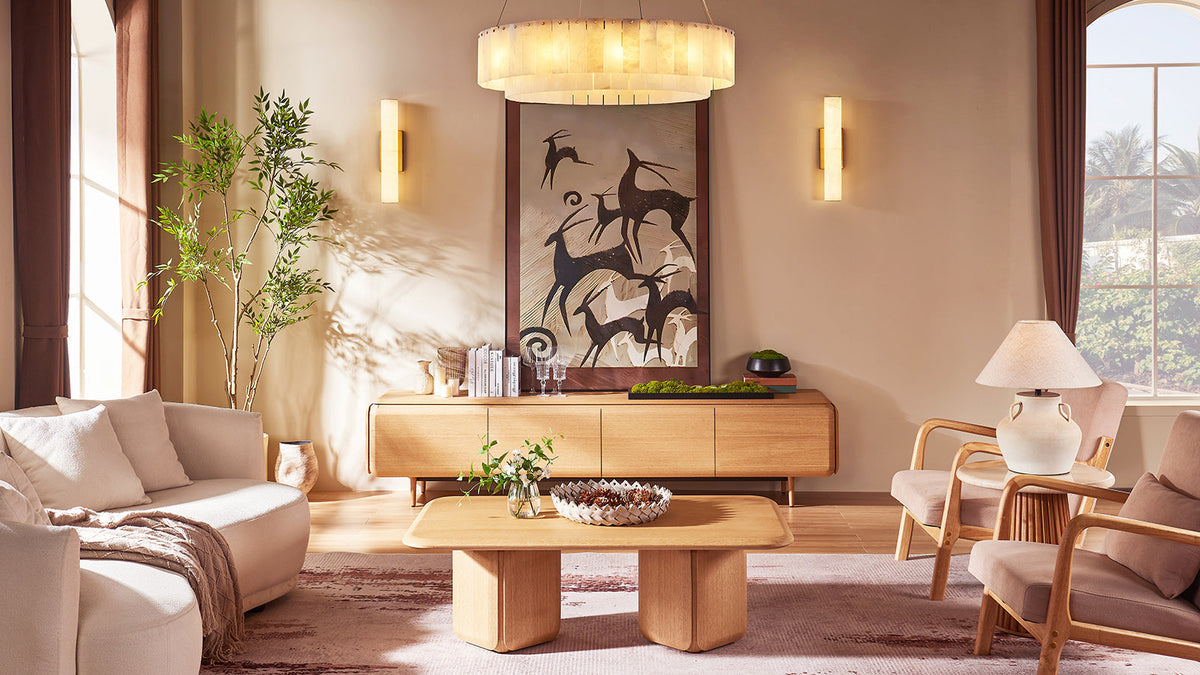
How to Choose a Media Console That Fits Your TV and Living Room
Learn how to choose the right media console for your TV and living room, including width, height, storage, wall-mounted TV placement, cable management, and style.
Read moreabout How to Choose a Media Console That Fits Your TV and Living Room
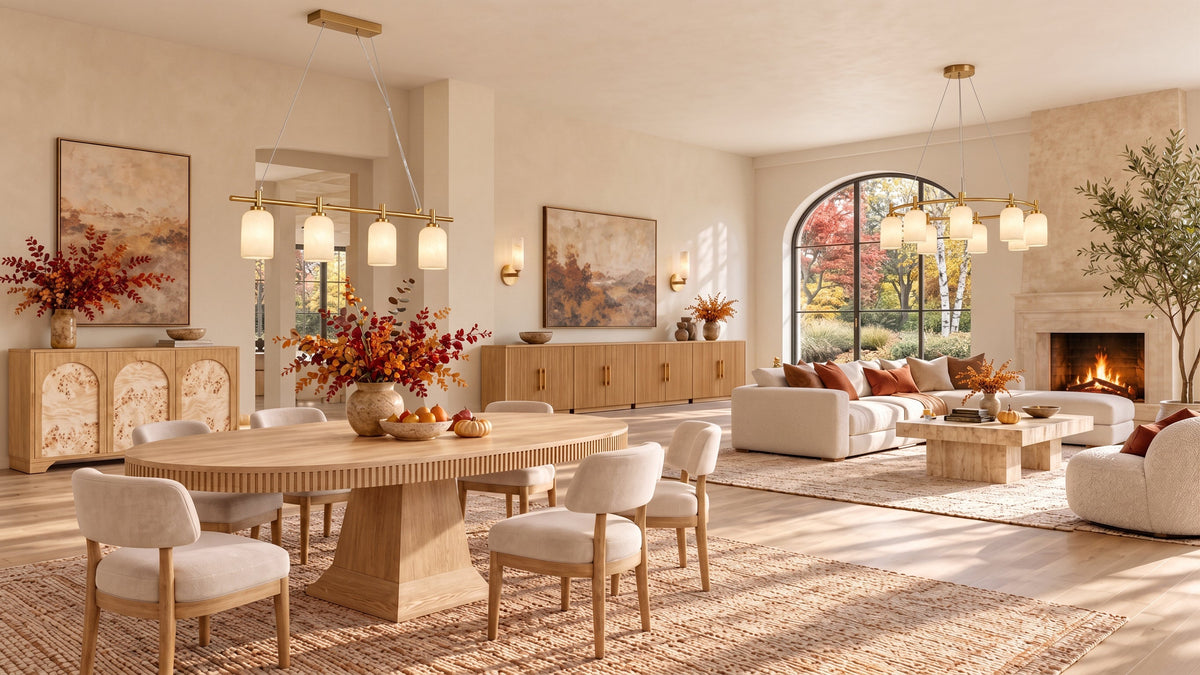
How to Layer Lighting in an Open-Concept Living and Dining Room
Learn how to layer ambient, task, and accent lighting in an open-concept living and dining room, with tips for chandeliers, wall sconces, pendants, floor lamps, and warm lighting balance.
Read moreabout How to Layer Lighting in an Open-Concept Living and Dining Room
Share:
How to Choose a Media Console That Fits Your TV and Living Room