


Your cart is currently empty.
Choosing a marble chandelier for a dining room is not simply a matter of finding the most dramatic fixture. The best dining room lighting should feel connected to the table below it, the scale of the room, the ceiling height, and the materials already used throughout the interior.
Marble chandeliers are especially effective in dining rooms because natural stone brings visual depth even when the light is turned off. Veining, tonal variation, and subtle differences in pattern allow the fixture to act as both lighting and a sculptural design element.
For modern interiors, this creates a useful balance. The room can remain clean and restrained while the chandelier provides texture, warmth, and a clear focal point above the dining table.
The most important questions are therefore not only “Which marble chandelier looks best?” but also: Should the chandelier be round or linear? How large should it be? How should the stone pattern relate to the furniture? And how can the fixture create impact without overwhelming the room?

The dining table is usually the strongest horizontal element in the room, which makes it the most useful reference point when choosing a chandelier shape.
A round table creates a centered composition. Chairs gather around one central point, so a round marble chandelier can reinforce that visual balance. The result often feels softer, more intimate, and more conversational.
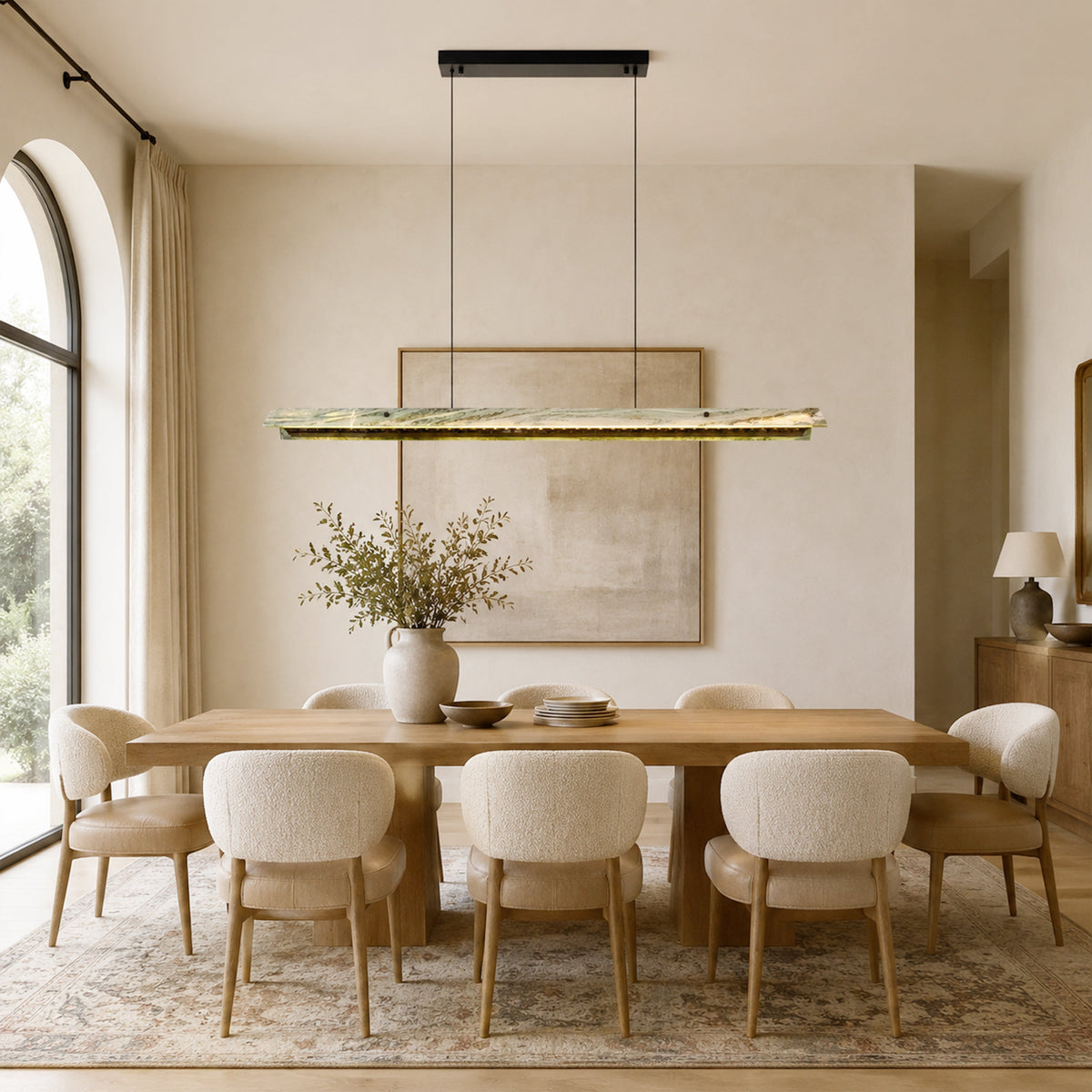
A rectangular dining table has a very different visual structure. Its length directs the eye horizontally through the room. In this situation, a linear marble chandelier can follow the same direction and create a stronger relationship between the table and the light fixture.
This does not mean the chandelier must exactly copy the table shape. Contrast can be beautiful. A round fixture above a rectangular table can soften an angular room, while a slightly curved linear chandelier can introduce movement above a very geometric table.
What matters most is proportion. The chandelier should feel intentionally connected to the table rather than looking like a small decorative object floating independently above it.

Chandelier size is one of the most important parts of dining room lighting, yet it is also one of the easiest details to underestimate.
A fixture can look substantial in a product photograph and still feel surprisingly small once it is installed above a large dining table. This is especially true in open-plan homes, where the dining area may visually share space with a kitchen or living room.
Marble lighting already carries a sense of material weight, but that does not mean the fixture should automatically be small. In a large room, a more generous chandelier often looks calmer and more intentional than a fixture that is visibly underscaled.
The chandelier should generally remain visually within the table footprint. If the fixture extends far beyond the table edges, it can dominate the seating area. If it is dramatically narrower, the room may feel unfinished.
A dining table inside a compact enclosed room needs a different lighting scale from the same table placed in a double-height or open-concept space.
When the surrounding architecture is larger, the chandelier usually needs more visual presence to hold its own. This may mean a wider fixture, a more layered composition, or a linear design that stretches across more of the table.
Higher ceilings create more empty vertical space. If the chandelier is too shallow or too small, the dining table can feel disconnected from the ceiling above.
In taller rooms, deeper or more sculptural marble chandeliers can help bridge that distance and make the entire dining zone feel more complete.
Hanging height affects both the appearance and usability of dining room lighting. A chandelier that sits too high can feel disconnected from the table. One that hangs too low may interfere with sightlines or make the table feel crowded.
The goal is to make the chandelier feel visually connected to the dining area while still allowing people seated across from each other to communicate comfortably.
Ceiling height, fixture depth, and chandelier scale should all be considered together. A compact fixture can sometimes sit slightly lower, while a large multi-tier marble chandelier may need additional breathing room.
Adjustable suspension is particularly useful in dining rooms because it allows the final installation height to respond to the actual furniture rather than relying on a fixed visual assumption.

Chandelier shape determines the proportions of the fixture, but marble pattern determines much of its personality.
Pietra lighting includes different natural stone appearances, which means a marble chandelier can feel quiet and refined, bold and graphic, warm and earthy, or rich and dramatic depending on the pattern.
Light stone with subtle veining works well in modern dining rooms where the goal is understated luxury. It pairs naturally with cream upholstery, pale oak, warm beige walls, and light stone furniture.
Stronger veining creates more visual movement. This can be particularly effective when the dining furniture is relatively simple and the chandelier is intended to become the room's main statement.
Green stone introduces natural color without relying on painted surfaces. It can pair beautifully with walnut, brass, cream fabrics, darker wood, and warm neutral interiors.
A more linear pattern can reinforce the geometry of drum or linear chandeliers. This works especially well in contemporary interiors where clean architectural lines are already part of the room.
Because natural stone includes variation, the goal should not be perfect uniformity. Slight differences in tone and veining are part of what gives marble lighting its character.
Marble is visually substantial, so the surrounding room does not need to compete with it.
One of the easiest ways to create balance is to combine the chandelier with softer materials. Upholstered dining chairs, linen curtains, neutral rugs, and warm wood can prevent a stone-focused dining room from feeling overly hard or formal.

Open-concept dining areas create a different lighting challenge because the chandelier must define the dining zone without visually separating it from the rest of the home.
In these spaces, scale becomes especially important. A small fixture can disappear against the combined volume of the dining room, kitchen, and living area.
A larger marble chandelier can establish a clear visual center while the natural stone material helps connect the dining area to other architectural finishes such as countertops, fireplaces, flooring, and cabinetry.
Linear fixtures are particularly useful above longer dining tables because they create horizontal continuity. Large round or tiered chandeliers, meanwhile, can make a stronger sculptural statement in dining areas positioned beneath tall ceilings.
The best choice depends on what the room needs: horizontal definition, vertical drama, or a quieter central focal point.
A linear chandelier is often a natural choice because its horizontal proportions follow the table length. Rounded linear styles can provide the same coverage with a softer silhouette.
Yes. A round chandelier can create attractive contrast, especially in smaller dining rooms. The key is choosing a diameter that feels substantial enough for the table.
No. Simple silhouettes and natural stone patterns can make marble lighting feel contemporary and comfortable rather than overly formal.
No. Coordinating undertones and proportions is usually more important than using identical stone patterns.
Marble chandeliers can work with modern, contemporary, organic modern, transitional, and luxury interiors depending on the fixture shape, stone pattern, and surrounding materials.
The right marble chandelier does more than illuminate the table. It helps establish proportion, atmosphere, and material character throughout the dining room.
Start with table shape, consider the overall room scale, choose a stone pattern that supports the interior, and then let the chandelier become part of the architecture rather than an isolated decoration.
Explore Pietra Marble Lighting →
How to Choose a Linear Marble Chandelier for a Kitchen Island or Dining Table
Learn how to choose a linear marble chandelier for a kitchen island or dining table, including sizing, hanging height, stone color, open-concept styling, and modern lighting ideas.
Read moreabout How to Choose a Linear Marble Chandelier for a Kitchen Island or Dining Table
How to Choose a Marble Chandelier for Your Dining Room
Learn how to choose the right marble chandelier for your dining room, including round vs. linear designs, scale, ceiling height, stone pattern, and styling ideas for modern interiors.
Read moreabout How to Choose a Marble Chandelier for Your Dining Room
How Marble Lighting Brings Natural Luxury Into Modern Homes
Discover how marble lighting brings natural texture, warm illumination, and timeless luxury into modern homes, with styling ideas for dining rooms, living spaces, bedrooms, and entryways.
Read moreabout How Marble Lighting Brings Natural Luxury Into Modern Homes
Share:
How Marble Lighting Brings Natural Luxury Into Modern Homes
How to Choose a Linear Marble Chandelier for a Kitchen Island or Dining Table