


Your cart is currently empty.
A living room rug can make a space feel warmer, brighter, calmer, more grounded, or more refined. The best color is not just the one you like in a product photo — it is the one that works with your sofa, flooring, light, and daily rhythm.

Choosing a living room rug color can feel surprisingly difficult. A rug that looks beautiful online may feel too pale, too dark, too busy, or too flat once it enters your room.
That is because rug color does not work alone. It changes depending on your sofa, flooring, wall color, natural light, furniture finishes, and even the amount of visual texture already in the room.
Do you want the rug to brighten the room?
Ground the furniture?
Add pattern without noise?
Make the living room feel softer and more finished?
Before choosing a specific rug color, decide what role the rug should play in the living room. A rug can either calm the room, brighten it, ground it, or add a layer of pattern and movement.
If the space already has a lot of contrast, choose a quieter rug. If the room feels flat, choose a rug with subtle pattern or texture. If the furniture feels visually heavy, choose a lighter rug to open up the floor.
For a modern home, the most reliable rug colors are often warm neutrals, soft earth tones, muted grays, and tonal patterns. These colors support the furniture without making the room feel too decorated.
Rug color is less about finding a perfect match and more about choosing the right relationship. The rug should connect to the room’s existing palette while adding something the space needs.
Best for brightening the room and creating a soft, airy foundation. Works well with darker sofas, wood furniture, and small living rooms.
Warm, flexible, and easy to style. These shades pair well with oak, walnut, linen upholstery, and modern organic interiors.
Good for rooms that need a calmer, more modern look. Choose warm gray instead of blue-gray if the room already feels cool.
Best when you want drama, contrast, and grounding. Use carefully in small or low-light rooms so the space does not feel too heavy.
The sofa is usually the largest soft surface in the living room, so it should guide your rug choice. A rug does not need to match the sofa exactly. In fact, a little contrast usually makes the room feel more layered.
A patterned rug can be one of the easiest ways to add depth to a simple living room. The key is choosing a pattern that feels integrated, not loud.
For modern interiors, tonal patterns often work better than high-contrast ones. A soft grid, faded motif, carved texture, or subtle geometric design can make a room feel more finished without making the floor compete with the furniture.
A solid or nearly solid rug keeps attention on sculptural furniture, lighting, artwork, or bold upholstery.
A tonal pattern adds texture and dimension while keeping the palette calm and easy to live with.
A darker or more defined pattern can add structure, especially in a room with pale walls and light furniture.
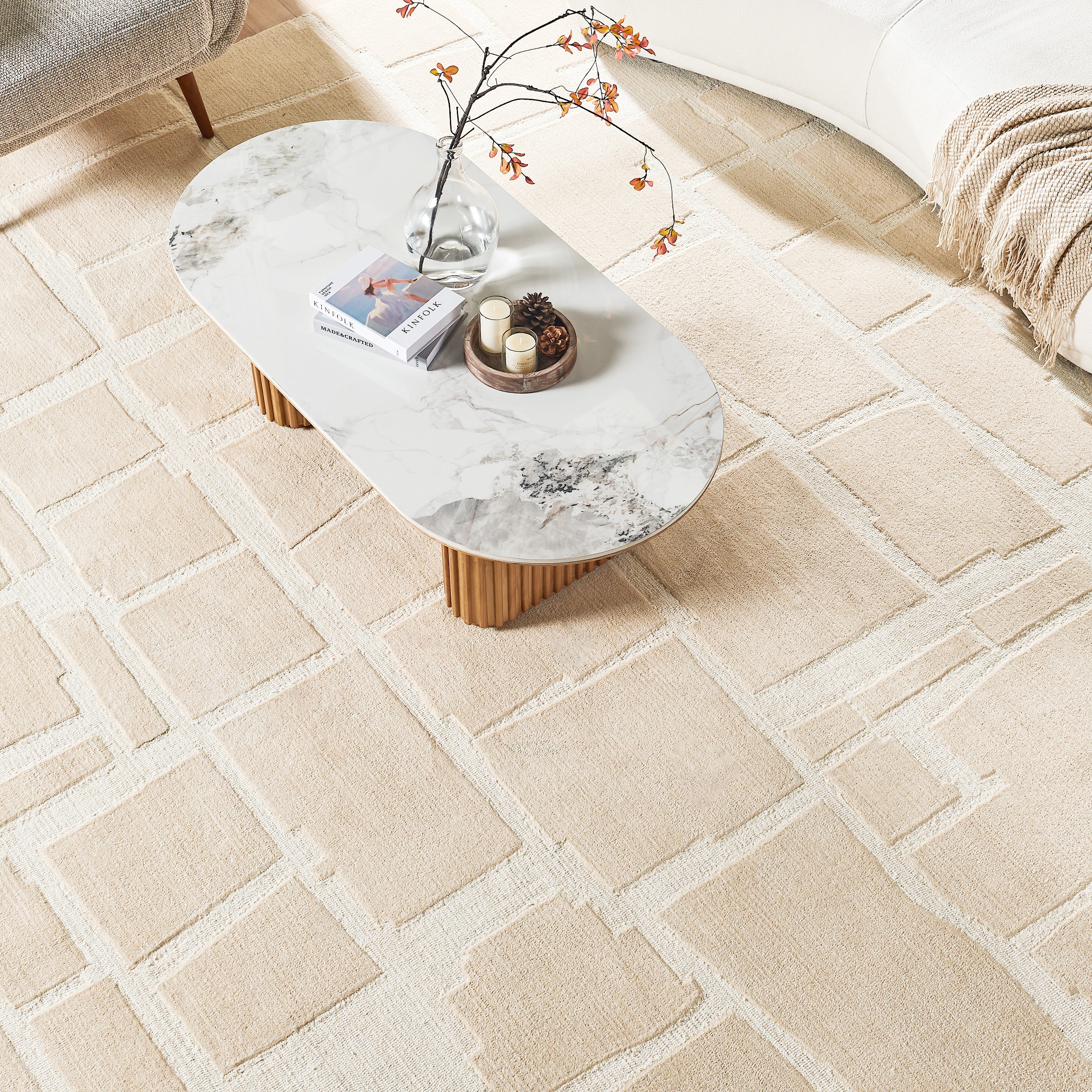
If you want a rug that adds texture without making the living room feel busy, the Benson Sketchline Wool-Blend Rug is a strong example of a tonal pattern done quietly.

Inspired by hand-drawn studies and architectural drafts, Benson features a soft sketchline grid with gently raised geometric blocks. The warm sand and ivory palette keeps the look calm and tonal.
It works especially well when you want the rug to add quiet structure, texture, and visual interest without overwhelming the rest of the living room.
View product →A rug does not need to match the sofa, curtains, and walls exactly. A little contrast helps the room feel layered.
Warm beige and cool gray can clash if the rest of the room has a different undertone.
Dark rugs can be beautiful, but they may make a small or low-light room feel smaller.
A pattern works best when it connects to the room’s palette and does not compete with every other detail.
Neutral colors such as ivory, beige, sand, taupe, and warm gray are some of the most versatile choices for living rooms. They work with many sofa colors, flooring types, and furniture styles.
Either can work. A lighter rug can brighten the room, while a darker rug can create contrast and grounding. The key is to avoid choosing a rug that blends too closely with the sofa.
Light rug colors such as cream, ivory, beige, and soft warm gray can make a living room feel more open and spacious, especially when paired with lighter walls and natural light.
Yes. Patterned rugs can add depth and help hide everyday wear, especially when the pattern is subtle, tonal, and connected to the rest of the room’s color palette.
The right living room rug color should make the furniture, flooring, and natural light feel more connected. It does not need to be loud to make an impact.
In many modern homes, a warm neutral or tonal patterned rug is the easiest way to add softness, structure, and quiet visual interest.
Explore the Benson Rug →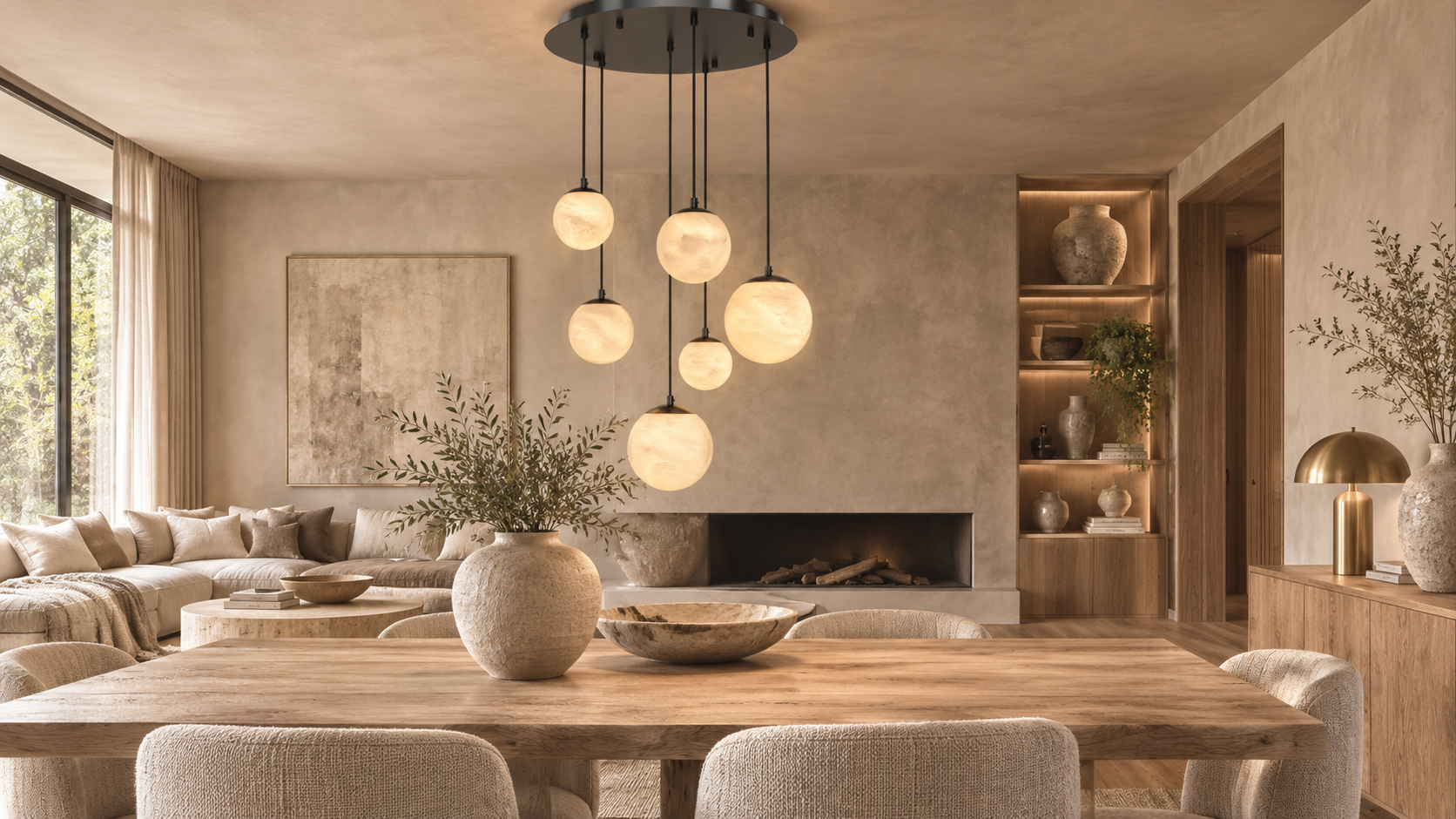
Resin vs. Alabaster Lighting: Which Material Is Right for your Home?
Read moreabout Resin vs. Alabaster Lighting: Which Material Is Right for your Home?
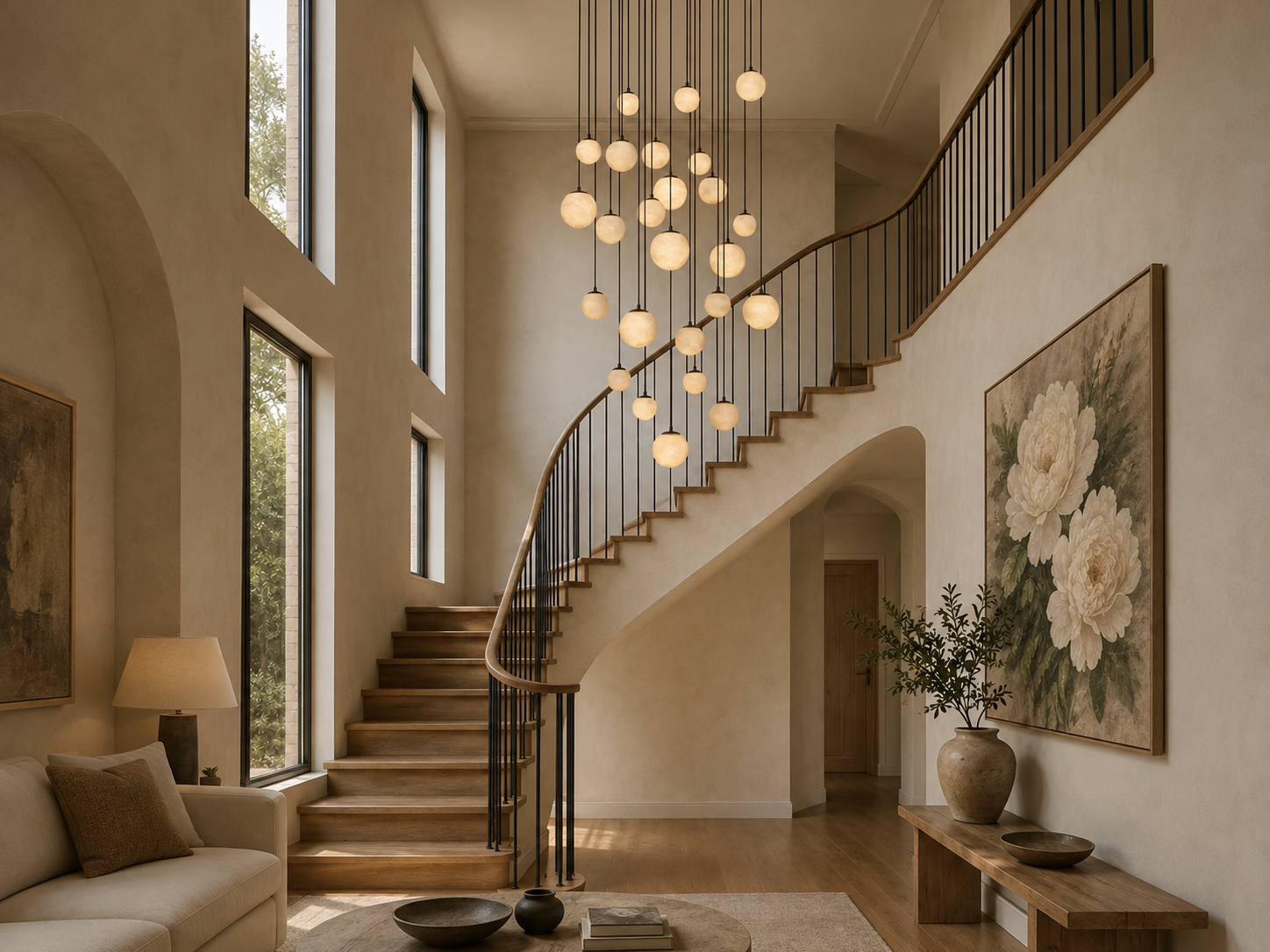
From Sconces to Statement Chandeliers: What Resin Makes Possible
Read moreabout From Sconces to Statement Chandeliers: What Resin Makes Possible
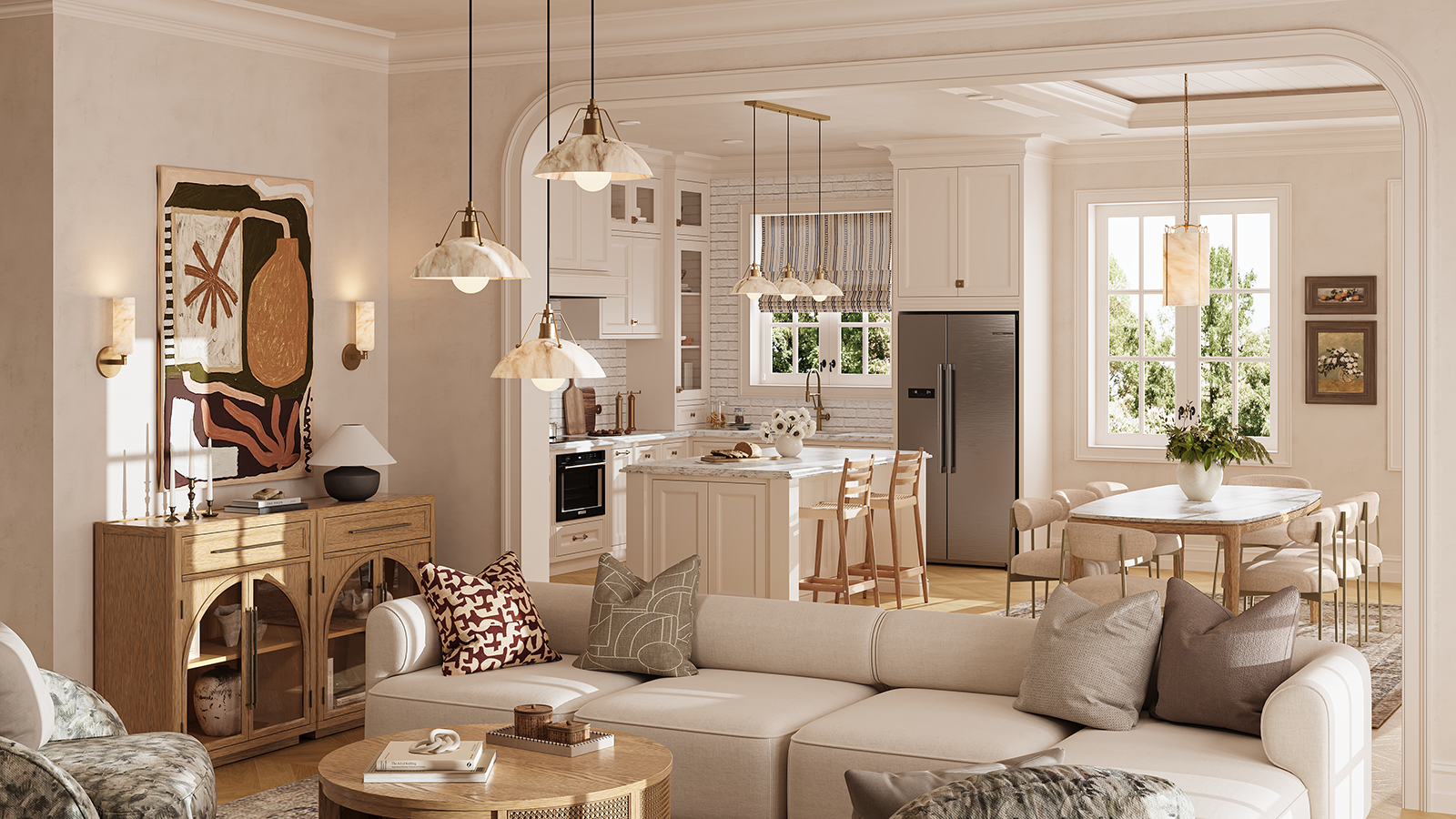
The Case for HOULTE Resin Lighting in Real Homes
Why does HOULTE resin lighting work so well in real homes? Explore its stone-inspired character, practical care, flexible forms, room-by-room applications, and the details to verify before choosing a fixture.
Read moreabout The Case for HOULTE Resin Lighting in Real Homes
Share:
Rectangular Rugs vs Round Rugs: How to Choose the Right Shape for Your Home
Outdoor Wall Sconces: How to Choose the Right Style for Modern Homes